A barren fence line is a missed opportunity. Whether it’s a tired chain-link perimeter or a fresh privacy fence crying out for character, the strip along your property line can shift from eyesore to asset with smart, simple landscaping. The good news? Most fence line projects don’t demand a pro crew or a permit, just planning, a few weekends, and materials that won’t crater your budget. This guide walks through practical, proven ideas to turn that narrow stretch into a standout feature, using plants, hardscape, and vertical tricks that work with real backyards and realistic schedules.
Table of Contents
ToggleKey Takeaways
- Simple backyard landscaping along fence lines transforms bare strips into attractive borders using layered plants, low-maintenance shrubs, and hardscape without requiring permits or professional crews.
- Low-maintenance perennials and shrubs like boxwood, liriope, and ornamental grasses thrive with minimal care when spaced properly and mulched with 2–3 inches of shredded bark.
- Layered planting using the ‘thriller, filler, spiller’ approach—tall plants in back, mid-height in middle, and groundcovers in front—creates visual depth and hides fence flaws effectively.
- Budget-friendly hardscape options like gravel, timber borders, and landscape blocks cost $1.50–$5 per linear foot and eliminate watering while improving drainage and erosion control.
- Vertical gardens using clematis vines, climbing hydrangea, or pocket planters maximize tight spaces and add greenery without taking up ground-level real estate.
- Strategic lighting with solar path lights or low-voltage LED fixtures extends usability and highlights landscaping work after dark, adding finished appeal to patios and deck areas.
Why Fence Line Landscaping Makes a Big Impact
Fence lines define space. They frame the yard, block sightlines, and, when left bare, highlight every dent, rust stain, or weathered board. Landscaping along a fence does three things well: it softens hard edges, adds depth to shallow lots, and hides maintenance headaches without major construction.
From a practical standpoint, a planted border also protects fence posts from lawn mower collisions and reduces weed pressure if you mulch or lay landscape fabric. It’s a high-visibility fix that photographs well and signals to neighbors (and buyers, if resale matters) that the property is maintained.
The strip between fence and lawn is often narrow, 18 to 36 inches is typical, so plant selection and layout matter more than square footage. Choose species that won’t outgrow the space or require constant pruning. And remember: a fence line catches reflected heat from both the fence material and afternoon sun, so factor in heat tolerance and irrigation access before you plant.
Low-Maintenance Plant Borders for Fence Lines
If weekend warrior status isn’t your goal, stick with perennials and shrubs that thrive on neglect. Dwarf boxwood, nandina, or compact holly cultivars form tidy hedges without monthly shearing. Space plants according to mature spread, not nursery pot size, to avoid overcrowding in year three.
For color with minimal fuss, try liriope (monkey grass), which tolerates shade and drought once established, or knockout roses if you’ve got six-plus hours of sun. Both handle clay or sandy soil and rarely need more than an annual spring cutback. Mulch with 2 to 3 inches of shredded hardwood or pine bark to suppress weeds and hold moisture.
In regions with deer or rabbit pressure, opt for lavender, Russian sage, or ornamental grasses like maiden grass or blue fescue. These are unpalatable to browsers and add texture without herbicide or netting. Space taller grasses 24 to 36 inches apart: they fill in fast and screen the lower third of most fences by season two.
Safety note: Wear gloves when handling barberry or holly, both have thorns. If your fence shares a property line with a neighbor’s pool or play area, skip toxic species like yew or oleander.
Create Depth with Layered Plantings
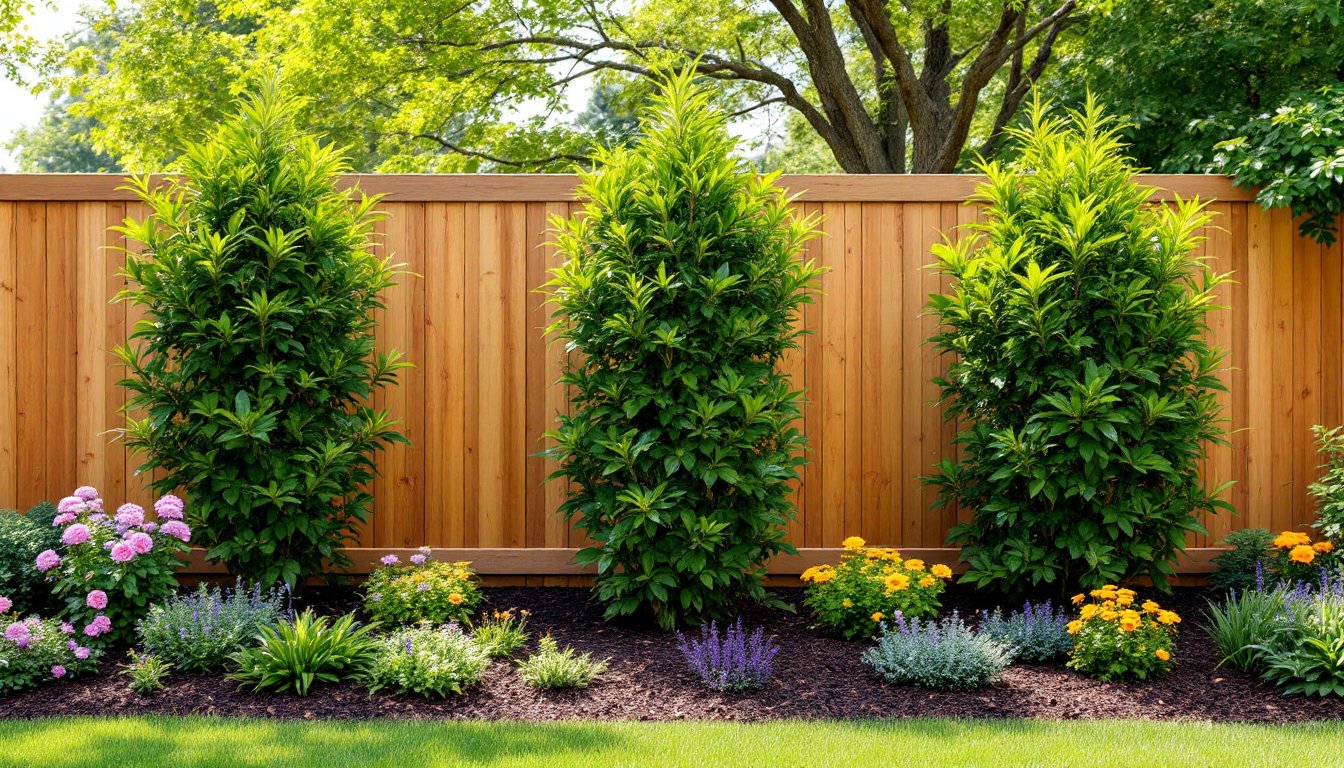
A single-file row of shrubs reads flat. Layering plants by height and bloom time creates a border that looks intentional and hides fence flaws. Start with a “thriller, filler, spiller” approach borrowed from container design: tall plants in back, mid-height fill in the middle, and low groundcovers or sprawlers in front.
Against a six-foot privacy fence, use evergreen shrubs like Skip laurel or Green Giant arborvitae as the backbone (plant these 3 to 4 feet from the fence to allow airflow and future growth). In front, add mid-height perennials, coneflower, salvia, black-eyed Susan, that bloom in staggered windows from spring through fall. Edge with creeping thyme, sedum, or ajuga to soften the lawn transition.
For chain-link or shorter fences, reverse the strategy: plant taller ornamental grasses or climbing vines to mask the fence, then use lower shrubs in front. This layering trick works on properties similar to simple side of house landscaping spaces where depth is limited but visibility is high.
Mulch pathways between layers to simplify maintenance and reduce competition. If you’re mixing sun-lovers with shade plants, map your fence’s sun exposure by hour, most wood and vinyl fences cast a 2- to 4-foot shadow that shifts through the day.
Budget-Friendly Hardscape Solutions
Not every fence line needs plants. Hardscape offers a clean, permanent fix that skips watering, fertilizing, and seasonal dieback. The simplest budget move is a gravel or decomposed granite border, spread landscape fabric first, then top with 2 to 3 inches of stone. Expect to cover roughly 100 square feet with a single cubic yard of material.
For more structure, consider a low 4×4 timber or concrete block border stacked one or two courses high and backfilled with soil or gravel. This raises the fence line planting bed, improves drainage, and keeps mulch from washing onto the lawn. Timber edging costs around $3 to $5 per linear foot for materials: concrete block runs $1.50 to $3 per block, depending on region and finish.
Small rocks for landscaping are another cost-effective option, especially river rock or pea gravel in the ½- to ¾-inch range. These drain well, deter weeds, and pair cleanly with modern or minimalist fence styles. Avoid placing rock directly against wood fences, trapped moisture accelerates rot. Leave a 6-inch gap or use a pressure-treated sill board as a buffer.
If your fence sits on a slope, terracing with landscape block or stone prevents erosion and creates level planting pockets. This is structural work, check local codes if you’re building a retaining wall over 2 feet high. Most jurisdictions require an engineer’s stamp and permit for taller walls, especially if they carry a load.
Vertical Garden Ideas to Maximize Small Spaces
When horizontal real estate is tight, go vertical. Fences are natural trellises, use them. Clematis, climbing hydrangea, or Confederate jasmine (in warmer zones) cover chain-link or wood fast and bloom reliably. Install galvanized wire or welded wire mesh (2×4-inch grid) with fence staples or screw-in hooks to give vines purchase on smooth surfaces.
For edibles, build a simple vertical pallet planter or attach pocket planters made from landscape fabric. These work well for herbs, strawberries, or trailing annuals and add functional green without footprint. Secure planters to fence posts, not just the pickets, using galvanized lag screws rated for outdoor use. Each planter should hold no more than 10 to 15 pounds when saturated to avoid sagging or pullout.
Homedit features creative vertical garden designs that adapt to small yards. Many use modular systems that mount with brackets, making them easy to reposition or take down for fence maintenance. If your fence is vinyl or composite, check the manufacturer’s warranty, some void coverage if you drill into panels.
Safety note: Use a stud finder or tap test to locate fence posts before driving screws. Hitting a post ensures solid hold: screwing into thin boards or hollow vinyl will fail under weight. Wear safety glasses when drilling overhead, and use a cordless drill with adjustable torque to avoid stripping screws in softer woods like cedar or pine.
Lighting and Decorative Touches for Fence Landscaping
Once plants and hardscape are in, lighting extends usability and highlights your work after dark. Solar path lights are the no-wire easy button, stake them every 6 to 8 feet along the border for even illumination. For brighter, more reliable output, run low-voltage LED landscape lighting on a transformer. A basic kit covers 100 to 150 feet and pulls less than 100 watts total, so it’s safe for DIY installation.
Mount uplights at the base of tall grasses or shrubs to cast dramatic shadows on the fence. Use downlights or bullet fixtures clipped to fence posts to wash plants from above. Both techniques add depth and make landscaping around patio or deck areas feel more finished.
For decorative touches, consider horizontal slat privacy screens that layer in front of the fence, as seen in designs on Gardenista. These add modern texture and work especially well with minimalist plantings or gravel beds. Stain or paint them to contrast with or complement the existing fence.
Other budget-friendly accents: outdoor mirrors (weatherproof acrylic, not glass) to fake depth, hanging planters on shepherd’s hooks, or a simple trellis painted a bold color. Avoid cluttering the line, one or two focal points per 20-foot section is enough. If you’re adding art or metal pieces, make sure they’re rated for outdoor exposure and won’t rust or flake onto plants.
Conclusion
Fence line landscaping isn’t glamorous, but it’s one of the highest-return DIY moves for backyard curb appeal. Whether it’s a simple perennial border, a gravel strip, or a vertical herb wall, the key is matching the solution to the site, sun, space, and how much time you’re willing to invest. Start small, test ideas in one section, and scale what works. The fence will thank you.