Florida’s backyard climate is a double-edged sword. Sure, year-round growing sounds like a dream, but between the scorching sun, hurricane-season downpours, and sandy soil that drains like a sieve, most landscaping advice written for cooler states won’t cut it. Homeowners who transplant northern design ideas often end up battling wilted plants, waterlogged lawns, and sky-high irrigation bills. The good news? With the right plant choices, smart hardscaping, and a few regional tricks, a Florida backyard can become a low-maintenance retreat that shrugs off heat and humidity. This guide walks through practical strategies tailored to the Sunshine State’s quirks, from native plantings that survive on rainwater alone to shade structures that drop temperatures by 10°F.
Table of Contents
ToggleKey Takeaways
- Florida backyard landscaping ideas succeed by choosing native plants adapted to sandy soil, intense sun, and hurricane-prone conditions rather than transplanting northern designs that require constant maintenance.
- Native species like live oak, coontie, and firebush thrive in Florida’s unique climate without supplemental irrigation once established, reducing water bills and landscape stress.
- Xeriscaping with zone-based water needs, 3–4 inch mulch layers, and drip irrigation systems can cut irrigation costs by 70% while surviving mandatory water restrictions.
- Strategic shade structures positioned on west-facing sides of patios, combined with fast-growing native vines like coral honeysuckle, can lower backyard temperatures by 10–15°F and improve usability during hot months.
- Hardscape materials must resist UV degradation and salt spray—use concrete pavers, crushed shell gravel, and concrete block walls instead of materials that degrade quickly in Florida’s humid, salty climate.
- Coastal Florida properties benefit from salt-tolerant plantings like sea grape and sea oats, plus proper post-storm salt rinses, while water features require mosquito control measures like mosquitofish or BTI treatments to prevent disease vectors.
Understanding Florida’s Unique Landscaping Challenges
Florida spans USDA Hardiness Zones 8 through 11, meaning what thrives in Pensacola may fry in Miami. Before buying a single plant, check the zone for the specific location, a northern Florida yard faces occasional freezes, while South Florida never dips below 40°F.
Soil composition is another curveball. Most of the state sits on either sand or limestone-based alkaline soil with minimal organic matter. Sandy soils drain fast, great for avoiding root rot, terrible for holding nutrients or moisture. Amending with 2–3 inches of compost annually helps, but fighting the soil type is a losing battle. Choose plants adapted to low-nutrient, fast-draining conditions rather than hauling in topsoil every season.
Hurricane and storm resilience matters. High winds snap brittle trees and send loose mulch flying. Avoid shallow-rooted species like laurel oaks near structures: opt for natives with deep taproots like slash pine or live oak. Stake young trees with flexible ties (not wire) and remove stakes after 12 months, trees need to sway to develop strong trunks. Mulch beds should use shredded hardwood or pine bark (not cypress, which blows away) at 2–3 inches deep, kept 6 inches from trunks to prevent rot.
Salt tolerance is critical for coastal properties. Sea spray and storm surge deposit salt that burns foliage and poisons soil. Look for plants rated “high salt tolerance” like sea grape, beach sunflower, or muhly grass. Rinse hardscape and plants with fresh water after storms to flush salt buildup.
Native Plants That Thrive in Florida’s Climate
Native species evolved alongside Florida’s droughts, floods, pests, and hurricanes, they’re the low-maintenance backbone of any smart landscape. Once established (typically 6–12 months), most need zero supplemental irrigation outside extended dry spells.
Groundcovers and Low Growers
Sunshine mimosa (Mimosa strigillosa) spreads fast, tolerates foot traffic, and produces pink puffball blooms. It fixes nitrogen, enriching sandy soil naturally. Beach sunflower (Helianthus debilis) works for coastal zones, offering bright yellow flowers and salt tolerance. Both stay under 6 inches tall, choking out weeds without mowing.
Midsize Shrubs
Coontie (Zamia integrifolia) is a slow-growing, 2–3 foot cycad with glossy fronds, deer-resistant, drought-proof, and the only host plant for the endangered Atala butterfly. Firebush (Hamelia patens) delivers tubular red-orange blooms that hummingbirds mob: it grows 4–6 feet and reseeds freely (which can be a plus or minus, depending on the gardener’s patience). Simpson’s stopper (Myrcianthus fragrans) forms a dense 6–10 foot screen with fragrant white flowers and edible orange berries.
Trees for Structure
Many homeowners turn to shade-providing native trees that handle Florida’s extremes. Live oak (Quercus virginiana) is the gold standard, deep roots, sprawling canopy, and longevity measured in centuries. Slash pine (Pinus elliottii) grows fast (2–3 feet per year) and withstands wet or dry conditions. Southern magnolia (Magnolia grandiflora) offers year-round evergreen coverage plus iconic white blooms, though it demands 20+ feet of clearance at maturity.
Buy plants from nurseries specializing in Florida ecotypes, genetics adapted to specific regions. A coontie grown from Miami seed may struggle in Jacksonville. Installation is straightforward: dig a hole 2–3 times the root ball width but no deeper, backfill with native soil (no amendments), and water deeply twice a week for the first 6 months.
Drought-Tolerant Landscaping Solutions
Water restrictions hit most Florida counties during spring dry season. A landscape built around drought-tolerant design principles slashes irrigation costs and survives mandatory watering bans.
Xeriscaping Basics
Xeriscaping isn’t cactus-and-gravel minimalism, it’s strategic plant grouping by water needs. Zone 1 (high water) clusters thirsty ornamentals near the house where hand-watering is easy. Zone 2 (moderate water) uses natives that need occasional summer soaking. Zone 3 (zero water) holds established natives and hardscape. This approach prevents overwatering drought-adapted plants, which causes root rot.
Mulch depth matters more in Florida than anywhere else. A 3–4 inch layer of shredded hardwood or melaleuca mulch cuts soil evaporation by 70% and moderates root-zone temperature. Skip dyed mulch, it’s often shredded pallets treated with arsenic-based preservatives. Refresh mulch annually: Florida’s heat and humidity break it down fast.
Efficient Irrigation
If irrigation is necessary, drip systems or micro-spray emitters deliver water directly to root zones with minimal waste. Standard spray heads lose 30–50% to evaporation in Florida’s midday heat. Install a rain sensor (required by law in many counties) to shut off systems during storms, it’s a $15 part that prevents thousands of gallons of waste.
Water early morning (4–8 AM) to reduce fungal disease and evaporation. Lawns need ½–¾ inch per week, measured with tuna cans placed around the yard. Most homeowners overwater by 2x, promoting shallow roots and chinch bug infestations. For ultimate water savings, consider artificial turf options that eliminate irrigation entirely while maintaining a green appearance year-round.
Creating Shade and Cooling Features
A shaded Florida backyard can feel 10–15°F cooler than a sun-baked one, critical for usability from May through October. Strategic shade turns a sweltering patio into a comfortable retreat.
Structural Shade
Pergolas topped with ¾-inch exterior-grade plywood and a waterproof membrane provide full overhead coverage. Use pressure-treated southern yellow pine (rated for ground contact, .40 pcf retention) for posts: set them in concrete footings 36 inches deep to meet Florida’s wind-load codes (typically 140 mph in coastal zones). Attach rafters with structural screws or hurricane ties, not nails, which pull out in high winds.
Shade sails (triangular fabric panels) cost less and install faster but need turnbuckle tensioners and stainless steel hardware to survive storms. Remove them when hurricane warnings are issued: a 12×12-foot sail catches enough wind to uproot improperly anchored posts. Fabric should be HDPE (high-density polyethylene) with UV inhibitors rated for 5+ years in full sun.
Living Shade
Fast-growing vines soften harsh pergola lines while adding cooling transpiration. Coral honeysuckle (Lonicera sempervirens) is a native evergreen that hummingbirds adore, it climbs via twining stems, so provide vertical wires or lattice. Passionflower (Passiflora incarnata) grows aggressively (some call it invasive) but delivers stunning purple blooms and edible fruit: host plant for Gulf fritillary butterflies. Both need full sun and tolerate neglect once established.
For integrating shade into patio designs, landscaping around existing patios offers techniques for blending structural and planted cooling elements. Position shade structures on the west and southwest sides of patios to block afternoon sun, the hottest part of the day.
Low-Maintenance Hardscaping Ideas
Florida’s climate is brutal on hardscape materials. Freeze-thaw cycles don’t exist, but UV degradation, salt spray, and constant moisture wreak havoc. Choose materials designed for the region.
Paver Patios
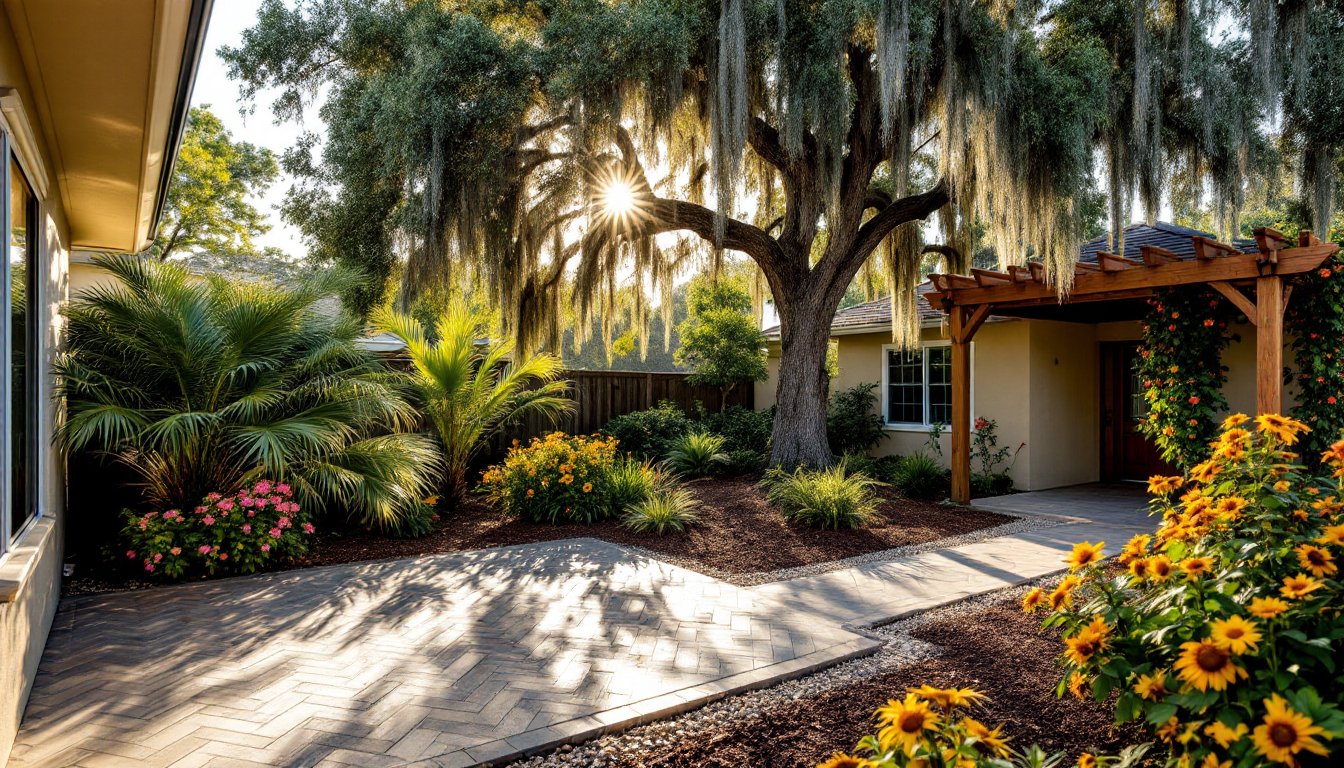
Concrete pavers (not clay brick, which spalls in humidity) set over 4–6 inches of compacted crushed limestone provide a stable, permeable surface. Use polymeric sand between joints, it hardens when wet, resisting washout during summer storms and blocking weeds. Seal pavers every 2–3 years with a wet-look or matte acrylic sealer to prevent mold and fading. Avoid dark colors: they absorb heat and become too hot for bare feet by noon.
For patio ideas suited to Florida’s climate, light-colored pavers in geometric patterns reflect heat while defining outdoor living zones. Install a 1–2% slope away from structures to prevent pooling.
Gravel and Decomposed Granite
Crushed shell or pea gravel (¾-inch) creates informal paths that drain instantly, essential during the rainy season. Edge with aluminum or steel landscape edging (¼-inch thick minimum) to prevent migration into planting beds. Lay landscape fabric underneath to block weeds: skip plastic sheeting, which traps water and breeds mosquitoes.
Decomposed granite stabilizes better than loose gravel but requires periodic re-compaction (rent a plate compactor for $50/day). Wet it thoroughly, compact in 2-inch lifts, and top with a stabilizer binder for a nearly pavement-hard surface that still allows water infiltration.
Retaining Walls and Borders
Concrete block retaining walls (not wood, which rots in 5 years) handle Florida’s sandy soils well. For walls over 18 inches tall, most jurisdictions require an engineered design and permit. Use cap blocks mortared in place to prevent shifting: backfill with crushed stone, not sand, and install perforated drain pipe at the base to relieve hydrostatic pressure.
For homeowners looking at similar challenges with foundation plantings, landscaping around house foundations addresses drainage and material selection to protect structures long-term.
Tropical and Coastal Design Elements
Florida’s subtropical climate invites bold, lush aesthetics that would look out of place in colder regions. Lean into the state’s natural vibe rather than fighting it.
Palms and Dramatic Foliage
Sabal palm (Sabal palmetto), Florida’s state tree, is hurricane-proof and cold-hardy to Zone 8. It grows slowly but reaches 40–50 feet at maturity with minimal care. Foxtail palm (Wodyetia bifurcata) offers a more manicured look with plume-like fronds: it needs Zone 10 or warmer and tolerates salt. Avoid queen palms unless prepared for constant potassium deficiency (yellowing fronds), they’re high-maintenance divas.
Layer in bold-leaved tropicals like bird of paradise (Strelitzia reginae), which produces orange crane-shaped blooms, or giant elephant ear (Colocasia gigantea) for 3–4 foot leaves that create instant drama. Both need regular water and afternoon shade in Central and South Florida.
Water Features
Water features like ponds add sound and movement while attracting wildlife. A simple recirculating fountain (pump rated 200–400 GPH) creates white noise that masks traffic. Use EPDM pond liner (45-mil thickness minimum) underlaid with geotextile fabric to prevent punctures from roots or sharp rocks.
Mosquito control is non-negotiable. Add mosquitofish (Gambusia affinis), which devour larvae, or treat standing water with Bacillus thuringiensis israelensis (BTI) dunks every 30 days, safe for pets, fish, and plants. Circulating water discourages egg-laying: stagnant features become nurseries within 48 hours.
Coastal Touches
For beachside properties, shell pathways, driftwood accents, and sea oats (Uniola paniculata) reinforce the coastal vibe. Sea oats are protected by law, buy nursery-grown plants with permits, never harvest from dunes. Plant them 12 inches apart in sandy soil: they’ll spread via rhizomes, stabilizing slopes naturally. Pair with beach sunflower and railroad vine (Ipomoea pes-caprae) for a zero-maintenance dune garden. Simple approaches to low-maintenance front yard designs translate well to coastal backyards, where simplicity and durability matter more than fussy ornamentals.
Conclusion
Florida landscaping isn’t about forcing northern plants to survive or battling the environment with constant inputs. It’s about working with sandy soil, summer storms, and relentless sun to build a yard that gets easier every year. Prioritize natives, design irrigation zones by water needs, and use hardscape materials that shrug off humidity. The result? A backyard that looks better in Year 3 than Year 1, and one that doesn’t demand weekend after weekend of damage control.