The farmhouse aesthetic never goes out of style, it just evolves. Whether you’re working with a sprawling lot or a compact suburban yard, the right landscaping can transform a plain front yard into a welcoming, picture-worthy entry that feels like home before you even open the door. This isn’t about dumping a truckload of gravel and calling it rustic. True farmhouse landscaping balances charm with function, blending natural materials, classic structures, and unfussy plantings that look good year-round without demanding hours of weekend maintenance. Here’s how to get the look, broken down by project type and budget.
Table of Contents
ToggleKey Takeaways
- Farmhouse front yard landscaping balances charm with function by using natural materials like weathered wood, stone, and galvanized metal alongside low-fuss perennials and native plants that thrive year-round with minimal maintenance.
- Classic picket fences (36–48 inches tall) define the property while maintaining sightlines, and both wood and vinyl options work well—simply choose between periodic repainting or maintenance-free durability.
- Layered garden beds with defined edges create depth and visual interest; combine taller plants like hydrangeas in back, mid-height perennials in the middle, and low ground covers up front using a soft color palette of whites, pinks, purples, and blues.
- Pathways set the tone for the entry and work best with natural, unfussy materials like flagstone, crushed gravel, brick pavers, or stepping stones rather than stamped concrete or geometric patterns.
- Budget-friendly farmhouse landscaping projects—such as DIY window boxes, gravel driveways, seeding lawn areas, and propagating existing plants—deliver authentic style without expensive hardscaping investments.
- The porch serves as the style anchor, elevated through painted or stained decking in classic hues, simple white balusters, vintage barn-style lighting, and seasonal planters that welcome visitors before they enter.
Essential Elements of Farmhouse Front Yard Design
Farmhouse landscaping isn’t just about picking white flowers and calling it a day. The style relies on a handful of core principles that distinguish it from, say, modern minimalism or English cottage sprawl.
Simplicity and symmetry anchor the design. Think balanced plantings flanking a front door, matching urns or planters, and clear sightlines to the entry. This isn’t rigid formality, it’s more about creating visual order without overdoing it.
Natural materials dominate. Weathered wood, unpainted stone, galvanized metal, and brick all fit the bill. Avoid anything too polished or synthetic, composite decking looks out of place here, while reclaimed barn siding or fieldstone feels right at home.
Low-fuss plants are key. Farmhouse yards lean toward perennials, flowering shrubs, and ground covers that don’t need constant deadheading or spraying. Hydrangeas, boxwood, lavender, and ornamental grasses are all solid choices. Native plants that thrive in your USDA zone will save water and labor.
Functional hardscaping ties it together. Gravel or crushed stone paths, simple timber edging, and open rail fencing all contribute to the look. Keep it practical, this is a working aesthetic, not a showpiece.
Classic Picket Fence and Gate Ideas
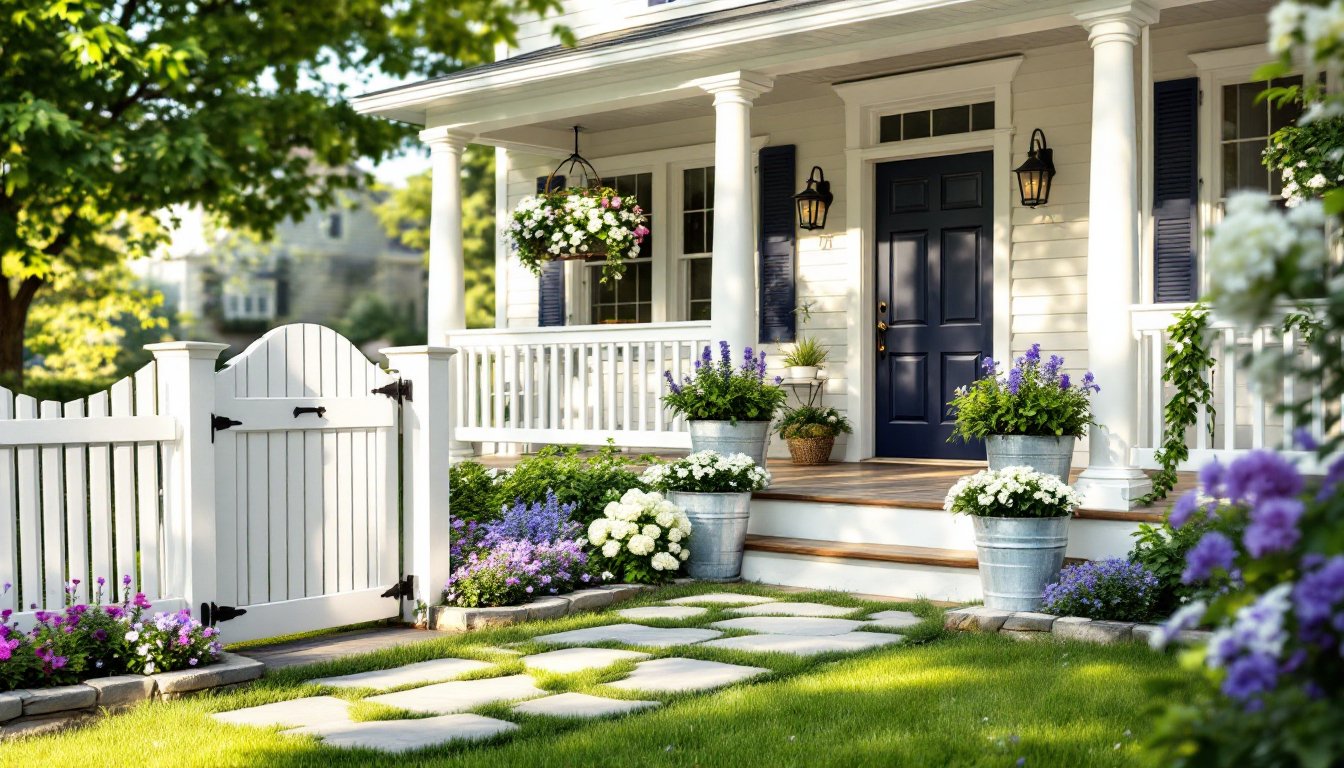
A white picket fence is the visual shorthand for farmhouse charm, but that doesn’t mean you’re stuck with one option. Cedar or pine pickets hold up well when properly primed and painted: expect to repaint every 3–5 years depending on climate. If you’d rather skip the maintenance, vinyl pickets offer the look without the upkeep, though they lack the character of real wood.
Fence height typically runs 36 to 48 inches for front yards, tall enough to define the property line without blocking sightlines. Check local codes: some HOAs or municipalities cap fence height in front setbacks.
For gates, a simple arched or flat-top design with a gravity latch works for most yards. If you’re handy with a circular saw and drill, building a basic picket gate is a weekend project: cut pickets to length, assemble the frame using 1×4 or 1×6 boards with cross bracing, attach pickets with galvanized screws, and hang with strap hinges.
Alternative fencing includes horizontal board fencing (think three or four rails) or split-rail cedar fencing for a more rustic vibe. Both pair well with the farmhouse look and require less precision cutting than individual pickets. Paint or stain is optional, natural weathering to silver-gray is perfectly on-brand.
Cottage-Style Garden Beds and Plantings
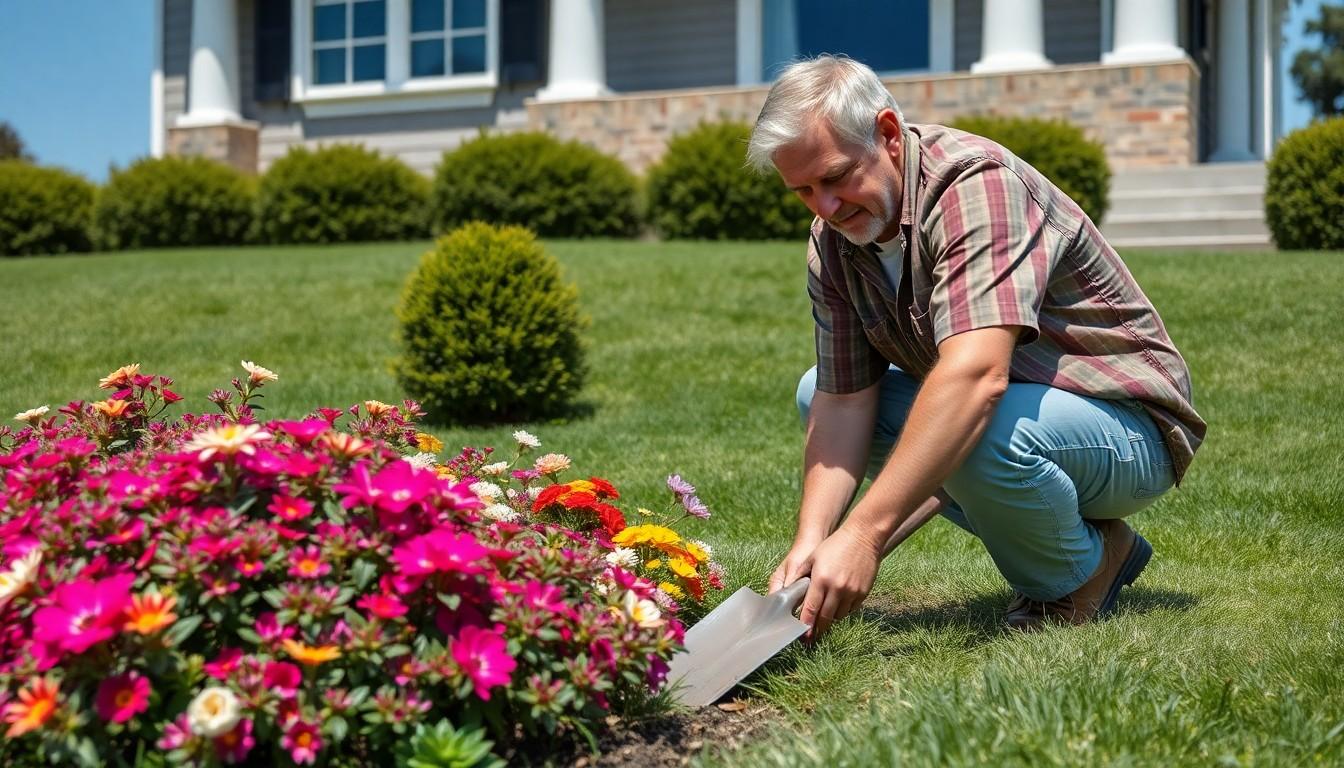
Farmhouse plantings lean informal and abundant, but that doesn’t mean haphazard. Start with defined bed edges, use a flat spade to cut clean lines, or install simple timber or stone edging to keep mulch in place and grass out.
Layering is the secret to a full, cottage-style bed. Place taller plants (like hydrangeas or butterfly bush) toward the back or center, mid-height perennials (coneflowers, salvia, catmint) in the middle, and low ground covers or annuals (creeping thyme, alyssum) up front. This creates depth and ensures nothing gets lost.
Color palette sticks to whites, soft pinks, purples, and blues with pops of yellow. Avoid neon or overly tropical hues, they clash with the subdued, pastoral vibe. Classic choices include white picket-fence roses, purple coneflower, blue Russian sage, and yellow black-eyed Susans.
Mulch matters. Shredded hardwood mulch in natural brown tones looks more authentic than dyed red stuff. Apply 2–3 inches to suppress weeds and retain moisture: refresh annually. For a more traditional look, some homeowners use pea gravel or small river rock instead, especially around drought-tolerant plantings.
Many design plans, like those found in resources on cottage garden borders, recommend mixing shrubs and perennials for year-round structure. Don’t skip soil prep, till in compost or aged manure before planting to give roots a strong start.
Rustic Pathway and Walkway Options
A well-placed pathway does more than get you from the driveway to the porch, it sets the tone. Farmhouse walkways favor natural, unfussy materials.
Flagstone or bluestone laid in irregular patterns with ground cover or moss between joints looks timeless. Budget $8–$15 per square foot for materials, not including base prep. You’ll need 4–6 inches of compacted gravel base for stability in freeze-thaw climates.
Crushed gravel or decomposed granite is the budget-friendly option. Install landscape fabric underneath to prevent weeds, add 3–4 inches of ¾-inch gravel, and edge with timber, brick, or steel to keep it contained. It’s permeable, so drainage is rarely an issue. Rake it smooth once or twice a year.
Brick pavers in running bond or herringbone patterns bring a classic, Colonial-farmhouse feel. Use clay brick, not concrete pavers with faux finishes. Set them on a sand bed over compacted gravel: sweep polymeric sand into joints to lock them in place. Homes interested in maintaining a cohesive aesthetic often draw inspiration from low-maintenance front yard ideas that balance charm and practicality.
Stepping stones through grass or ground cover work for secondary paths, think garden access or side entries. Space them about 18–24 inches apart (one comfortable stride). Dig out sod, set stones level with grade, and backfill edges.
Avoid stamped concrete or overly geometric paver patterns, they’re too modern. Keep lines soft and materials honest.
Farmhouse-Inspired Porch and Entry Enhancements
The porch is where farmhouse charm really shines. Even a modest stoop can be elevated with a few deliberate upgrades.
Wood or composite decking should be painted or stained in classic hues, white, gray, or natural wood tones. If you’re replacing boards, 5/4×6 treated decking is standard: 1×6 tongue-and-groove porch flooring is traditional but requires more care. Seal or paint before installation to prevent moisture wicking from below.
Railings and columns set the style. Simple square or turned balusters in white or off-white are the farmhouse default. If you’re rebuilding, check local codes, residential porches over 30 inches high usually require railings, and balusters must be spaced so a 4-inch sphere can’t pass through.
Lighting goes vintage. Gooseneck barn lights, lantern-style sconces, or simple black metal fixtures all work. Wire them on a switch or add a photocell for automatic dusk-to-dawn operation. If you’re not comfortable running new electrical, surface-mounted LED options exist, but they lack the clean look of recessed junction boxes.
Planters and pots add life. Galvanized tubs, wooden crates, or ceramic urns planted with seasonal flowers or evergreens flank doorways nicely. Drill drainage holes if they don’t already have them. Those seeking visual inspiration for front-of-house displays often turn to platforms like Gardenista for seasonal planting ideas and container combinations.
Front door color can make or break the look. Classic farmhouse goes with black, navy, deep green, or barn red. Sand and prime before repainting: use exterior acrylic latex in satin or semi-gloss for durability.
Budget-Friendly DIY Farmhouse Landscaping Projects
You don’t need a five-figure budget to nail the farmhouse look. Most of the aesthetic comes from elbow grease and smart material choices, not expensive hardscaping.
DIY window boxes are a cheap win. Build them from 1×6 and 1×8 cedar or pine boards, miter the corners, add a simple trim cap, and mount with galvanized brackets. Line with landscape fabric and fill with potting mix. Plant white petunias, trailing ivy, or herbs. Total cost: $25–$50 per box.
Repurposed materials add character. Old wooden ladders become plant stands, vintage watering cans turn into porch décor, and reclaimed barn wood can edge beds or build small signs. Hit estate sales, salvage yards, or online marketplaces.
Gravel driveways or aprons cost a fraction of asphalt. Homeowners looking to update entries on a budget often explore options found in simple front yard landscaping guides that emphasize gravel and native plantings. You’ll need to grade properly, lay fabric, and spread 3–4 inches of #57 or #8 stone. Rent a plate compactor for a stable base.
Seed over sod for new lawn areas. Prepare soil, broadcast seed suited to your region (cool-season fescue or warm-season Bermuda), rake lightly, and water daily until established. Costs about $0.10–$0.20 per square foot versus $0.50–$1.00 for sod.
Propagate your own plants. Many perennials, hostas, daylilies, sedum, divide easily. Split clumps in spring or fall, replant divisions, and you’ve doubled your stock for free. Cuttings from hydrangeas or boxwood root readily in moist sand or potting mix under a plastic dome.
Paint and trim go a long way. A fresh coat on shutters, porch rails, or a front door costs under $100 in materials and completely refreshes curb appeal. Use a quality exterior primer and two topcoats for longevity.
Conclusion
Farmhouse landscaping is all about honest materials, practical design, and a little patience. You’re not trying to impress a magazine photographer, you’re creating a front yard that feels welcoming, looks good in all four seasons, and doesn’t demand constant fussing. Start with one or two projects, whether that’s a new walkway, a fresh bed of perennials, or a DIY fence. The beauty of this style is that it rewards incremental effort, and every upgrade layers on more charm.