A hot tub can turn a cramped backyard into a personal retreat, if it’s done right. Too often, homeowners drop thousands on the tub itself, then realize they’re soaking in a view of chain-link fence and patchy grass. The good news? Budget-friendly landscaping can completely transform the space around a hot tub without requiring a second mortgage. With smart material choices, DIY-friendly projects, and a bit of creative planning, even a small yard can feel like a backyard resort. This guide walks through seven practical, affordable strategies to landscape around a hot tub, from privacy screens to lighting upgrades, all while keeping costs in check.
Table of Contents
ToggleKey Takeaways
- Small backyard hot tub landscaping on a budget requires prioritizing three essentials: a stable, level surface, privacy screening, and safe access before adding decorative elements.
- Budget-friendly privacy solutions like lattice panels ($20–$40), bamboo fencing ($30–$50), or planted evergreen shrubs ($15–$30 each) eliminate expensive fence replacement while creating instant screening.
- A gravel base pad ($75–$125 for a 10×10 area) topped with affordable concrete pavers ($1–$3 each) provides a stable, professional hot tub foundation without major structural costs.
- Solar path lights, low-voltage LED landscape lighting, and string lights cost $15–$150 total and dramatically improve ambiance, safety, and usability of your hot tub area.
- Selecting low-litter plants like hostas and ornamental grasses ($4–$12 each), combined with rock mulch instead of wood, reduces maintenance and protects hot tub filters from debris.
- A phased approach spreading costs across categories—surface (30–40%), privacy (20–25%), plants (15–20%), lighting (10–15%), and accessories (10%)—keeps budgets manageable while transforming a cramped yard into a backyard retreat.
Planning Your Budget-Friendly Hot Tub Landscape Design
Start by measuring the hot tub and the surrounding area. Most residential hot tubs range from 6 to 8 feet in diameter or square footage, so they need at least a 10×10-foot footprint when factoring in access for maintenance and safe clearances. Sketch a rough layout on graph paper (¼-inch grid works well at a 1-foot scale) and mark existing features: fences, utility lines, hose bibs, and electrical panels.
Identify priorities. Does the space need privacy first, or is drainage the bigger concern? Hot tubs require level, stable surfaces and adequate drainage to prevent water pooling. If the yard slopes, budget for gravel or crushed stone as a base layer, expect to spend $30–$50 per cubic yard, delivered.
Set a realistic total budget and break it into categories: surface/foundation (30–40%), privacy and screening (20–25%), plants and mulch (15–20%), lighting (10–15%), and accessories (10%). This keeps spending proportional and prevents blowing the budget on one element. If working with $1,000 total, that’s roughly $350 for decking or pavers, $225 for privacy, $175 for plants, $125 for lights, and $125 for extras.
Check local codes. Some jurisdictions require setbacks from property lines (often 5 feet minimum) and permits for permanent structures like decks or pergolas. Electrical work for hot tubs must meet National Electrical Code (NEC) Article 680 and typically requires a licensed electrician and inspection. Skipping this step can result in fines or insurance headaches.
Affordable Privacy Solutions for Your Hot Tub Area
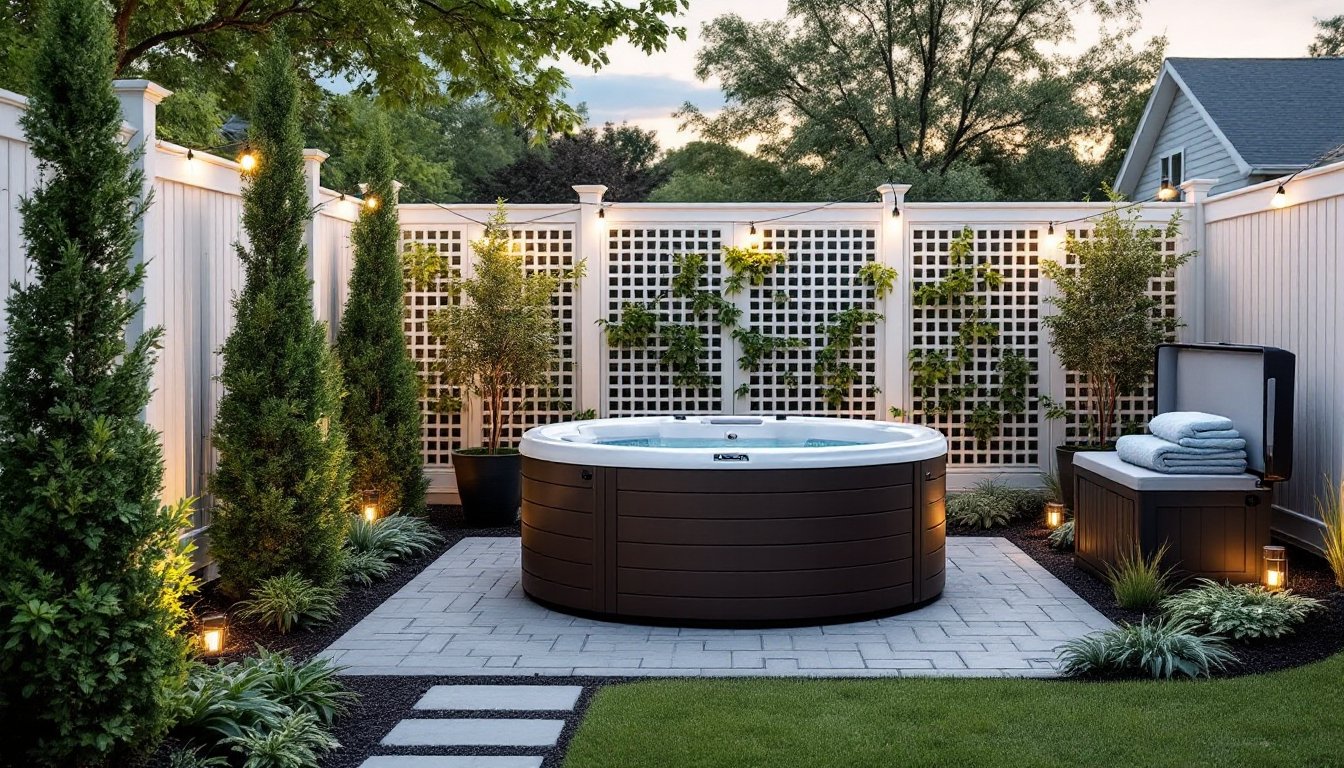
Privacy doesn’t have to mean expensive fencing. Lattice panels (4×8 feet, $20–$40 each at home centers) mounted on treated 4×4 posts create instant screening. Space posts 6 to 8 feet apart, set in concrete, and attach lattice with exterior-grade screws. Paint or stain to match existing fences. For a softer look, train fast-growing vines like clematis or honeysuckle up the lattice, they’ll fill in within one season.
Bamboo fencing rolls offer a budget-friendly tropical vibe. A 6-foot-tall by 8-foot-wide roll costs $30–$50 and can be zip-tied to existing chain-link or wood fences. Choose natural or black bamboo depending on aesthetic. Be aware that bamboo fades and weathers faster than wood, typically lasting 3–5 years in full sun and moisture.
For a living screen, plant evergreen shrubs like arborvitae (Thuja) or skip laurel (Prunus laurocerasus) in a staggered row. Gallon-sized plants run $15–$30 each and will reach 6 feet in 3–4 years with proper watering. Space them 3 to 4 feet apart for a dense hedge. Avoid planting directly against the hot tub: root systems can interfere with plumbing, and excess moisture from splashing can promote fungal issues.
DIY privacy screens can also be built from corrugated metal panels (2×8 feet, $25–$35 each) framed with 2x4s. This works especially well in modern or industrial-style yards. Just ensure sharp edges are capped or faced away from traffic areas. When planning layouts that maximize privacy in tight spaces, many of the same design principles for compact yards apply here, vertical layering and strategic placement go a long way.
DIY Decking and Patio Ideas That Won’t Break the Bank
Hot tubs need a stable, level surface. The least expensive option is a gravel pad: excavate 4–6 inches, lay landscape fabric, then fill with ¾-inch crushed stone (also called ¾-minus or road base). Compact in 2-inch lifts with a hand tamper or plate compactor (rent for $50–$75/day). Total material cost for a 10×10 pad runs $75–$125.
For a cleaner look, top the gravel with concrete pavers (12×12-inch or 16×16-inch). Big-box stores sell pavers for $1–$3 each. A 10×10 patio requires about 100 square feet: at $2/paver average, that’s roughly $200–$250 in materials. Lay pavers in a running bond or herringbone pattern over a 1-inch sand bed on top of the compacted gravel. Sweep polymeric sand into joints to lock them in place and resist weeds.
Ground-contact pressure-treated lumber (rated for direct soil contact) makes a budget deck frame. Use 2×6 joists on 16-inch centers, supported by 4×4 posts set in concrete or on precast deck blocks ($8–$12 each). Top with 5/4×6 pressure-treated decking boards ($2–$4 per linear foot). A simple 10×10 deck costs $400–$700 in materials if you do the labor. Always check if a deck permit is required: many jurisdictions mandate permits for decks over 30 inches high or attached to the house.
An even cheaper alternative: pallet decking. Source clean, heat-treated pallets (look for the HT stamp, not MB, which indicates toxic methyl bromide treatment) from local businesses, many give them away. Disassemble, denail, sand, and reassemble into a deck surface. Seal with exterior wood stain ($25–$40/gallon, covers ~200 sq ft). Pallet wood isn’t as durable as pressure-treated, but it’s nearly free and can last 3–5 years if properly sealed and maintained. The surrounding hardscape and patio areas will tie the hot tub into the broader yard design.
Budget-Conscious Plantings and Greenery Around Your Hot Tub
Choose plants that tolerate splashing, humidity, and occasional chlorine or bromine exposure. Avoid anything with dropping leaves, seed pods, or thorns, cleanup becomes a headache, and debris clogs filters. Stick with evergreens and low-litter perennials.
Good budget picks include hostas ($5–$10 per plant), ornamental grasses like blue fescue or mondo grass ($8–$12), and groundcovers such as creeping Jenny or ajuga ($4–$6 per 4-inch pot). Buy plants in smaller containers (4-inch or gallon) rather than 3-gallon, they’re half the price and establish just as well with a little patience.
For vertical interest, train climbing plants on trellises or use tall grasses like maiden grass (Miscanthus sinensis, $15–$25 per plant) as a natural screen. Incorporating rocks and gravel around plant beds reduces mulch needs and improves drainage near the tub.
Mulch is essential for weed suppression and moisture retention. Hardwood mulch costs $25–$35 per cubic yard (covers about 100 square feet at 3 inches deep). Avoid cypress or dyed mulch near hot tubs, cypress doesn’t hold up well in wet conditions, and dyes can leach into water. For a cleaner, low-maintenance look, use ¾-inch river rock or pea gravel ($40–$60/cubic yard). It won’t decompose, won’t blow away, and drains beautifully.
Plant in curved beds rather than straight lines. Curves feel more organic, create visual flow in small spaces, and allow more planting area without crowding the tub. Edge beds with black plastic landscape edging ($0.50–$1 per linear foot) or natural stone.
Inexpensive Lighting and Ambiance Enhancements
Solar path lights are the easiest, cheapest lighting option. Quality models cost $15–$30 for a 6-pack and require zero wiring. Place them along walkways, around the hot tub perimeter, or tucked into plant beds. Look for lights with replaceable NiMH batteries, cheaper solar lights often use non-replaceable cells that die within a year.
For brighter, more reliable light, run low-voltage landscape lighting (12V). A basic kit with transformer, cable, and 6–8 fixtures costs $80–$150. Transformers plug into a standard outdoor GFCI outlet. Bury cable 6 inches deep (or run along fence lines) and connect fixtures with twist-on connectors. Use LED bulbs, they last 15+ years and draw minimal power. Spotlight key features like privacy screens, plantings, or the hot tub itself. When considering overall ambiance and accessibility improvements, ideas from low-maintenance front yard designs can often translate to backyard hot tub zones.
String lights add instant atmosphere. Outdoor-rated LED string lights cost $20–$40 for 25–50 feet. Hang them on fence posts, pergola beams, or shepherd’s hooks. Choose warm white (2700K) for a cozy feel. Make sure the plug end is near a GFCI outlet, or use an outdoor-rated extension cord (16-gauge or heavier).
DIY tiki torches or citronella candles in galvanized buckets filled with sand provide flickering light and mosquito deterrent. Torches cost $5–$10 each, fuel is cheap, and they’re easy to move around. Just keep them at least 3 feet from the hot tub and any structures.
For color and drama, battery-operated submersible LED lights ($10–$20 for a 4-pack) can be floated in the hot tub itself or placed in nearby water features or glass vases. Many are waterproof to IP68 and change colors via remote.
Low-Cost Storage and Accessory Solutions
Hot tub accessories, chemicals, towels, filters, clutter fast. A simple deck box (50–120 gallon, $60–$120) keeps supplies dry and out of sight. Choose resin models rated for outdoor use: wood boxes look great but require sealing and maintenance. Bonus: deck boxes double as extra seating.
Build a DIY storage bench from 2x4s and exterior plywood. A 4-foot-long bench with a hinged lid costs $50–$80 in materials and takes a few hours to build. Use exterior-grade screws and wood glue, then finish with exterior stain or paint. Line the interior with a tarp or plastic sheeting to keep contents dry. Inspiration for creating functional side-yard storage can be adapted from landscaping side yard solutions, often the same tucked-away zones work for hot tub gear.
Towel hooks or a wall-mounted rack prevent soggy towels from piling on the deck. Stainless steel or powder-coated hooks cost $5–$15 each and mount directly to fence posts or siding with lag screws. A freestanding bamboo ladder ($25–$40) leans against a wall and holds multiple towels.
For a hot tub cover lift, consider a DIY version using PVC pipe and fittings. Plans are widely available online (check Hunker and similar DIY sites): materials run $40–$70. A lift makes cover removal a one-person job and extends cover life by keeping it off the ground. Alternatively, a simple removable handrail made from galvanized pipe and floor flanges ($30–$50) aids entry and exit, especially for older adults or kids.
Keep a small outdoor rug or mat ($15–$40) nearby for barefoot comfort and to reduce dirt tracking. Choose polypropylene or recycled plastic, both dry quickly and resist mold.
Conclusion
Landscaping around a small backyard hot tub doesn’t require deep pockets, just smart planning and a willingness to DIY. Focus on the essentials first: a stable base, privacy, and safe access. Layer in plantings, lighting, and storage as budget allows. Most importantly, don’t rush. A phased approach spreads costs and lets homeowners learn what works as they go. With these strategies, that backyard hot tub becomes more than an appliance, it becomes a destination.