A well-designed backyard shouldn’t demand every weekend and a second mortgage. Many homeowners believe a beautiful outdoor space requires endless hours of pruning, mowing, and costly upgrades, but that’s not the case. With strategic plant choices, smart hardscaping, and a focus on durable materials, anyone can create an attractive, functional backyard that practically runs itself. This guide walks through proven techniques for cutting both maintenance time and upfront costs, from ground covers that choke out weeds to DIY projects that add character without ongoing babysitting.
Table of Contents
ToggleKey Takeaways
- Low maintenance low budget backyard landscaping saves hundreds or thousands of dollars annually by replacing traditional turf with ground covers, native plants, and durable hardscaping that requires minimal upkeep.
- Ground cover alternatives like clover, creeping thyme, and mulch effectively suppress weeds and reduce mowing costs compared to conventional grass lawns.
- Native perennials and ornamental grasses adapt naturally to local conditions, establish in one to two years, and require minimal watering once established.
- Budget-friendly hardscaping options like concrete pavers ($2–$5 per square foot), gravel pathways ($30–$50 per ton), and DIY raised beds ($100–$200) add structure and reduce plant maintenance zones.
- Drip irrigation systems, soaker hoses, and rain barrels cut water consumption by 30–50% while keeping plants healthier than overwatering approaches.
- DIY features such as raised beds, gravel patios, fire pits, and dry creek beds inject personality into low maintenance landscapes without creating ongoing maintenance burdens.
Why Low Maintenance Landscaping Makes Financial Sense
Ongoing landscape upkeep drains wallets faster than most homeowners anticipate. Weekly mowing, seasonal fertilization, irrigation repairs, and plant replacements add up to hundreds or thousands of dollars annually. A low-maintenance design flips that equation by frontloading smart choices, native plants adapted to local conditions, permeable hardscaping that eliminates mowing zones, and irrigation systems that require minimal tweaking.
Beyond the direct savings, reduced maintenance frees up time that would otherwise go to yard work. That means fewer contractor callouts, less equipment investment (high-end mowers, trimmers, and blowers aren’t cheap), and lower water bills when drought-tolerant plants replace thirsty turf. For homeowners juggling busy schedules, the value of reclaiming weekends can’t be overstated.
Property value gets a boost, too. Buyers increasingly prioritize outdoor spaces that won’t monopolize their free time. A thoughtfully designed, low-maintenance backyard signals smart stewardship and modern practicality, both selling points in today’s market.
Budget-Friendly Ground Cover Solutions
Traditional turf grass is a money pit: it demands regular mowing, aerating, dethatching, and feeding. Swapping high-maintenance lawn areas with ground covers slashes labor and cost while suppressing weeds.
Clover (white or microclover) is a top pick for sunny to part-shade zones. It fixes nitrogen in the soil, stays green through dry spells, and tolerates moderate foot traffic. Seed runs about $10–$15 per pound, covering roughly 4,000 square feet. No mowing required if a meadow look is acceptable: occasional trimming keeps it tidy.
Creeping thyme works well in full sun and between pavers. It’s drought-tolerant once established, releases a pleasant fragrance when stepped on, and costs around $3–$5 per 4-inch pot. Space plants 6–12 inches apart for coverage within one growing season.
Mulch and wood chips aren’t living ground covers, but they’re unbeatable for weed suppression and moisture retention. A 2–3 inch layer of shredded hardwood mulch costs $25–$40 per cubic yard (covering about 100 square feet at 3 inches deep). Replenish annually or biannually as it decomposes. Avoid dyed mulches near edibles: natural bark is safer and breaks down into valuable organic matter.
For steeper slopes or erosion-prone areas, creeping juniper or vinca minor (periwinkle) establish quickly and require almost no care. Both spread aggressively, so use them where containment isn’t an issue. Plant spacing of 18–24 inches works for most varieties.
Choosing Native Plants That Thrive With Minimal Care
Native plants have spent millennia adapting to local soils, rainfall patterns, and pests, meaning they need far less coddling than exotic imports. Consult your state’s native plant society or local extension office for region-specific recommendations: what thrives in Colorado will struggle in Georgia.
Perennials are the backbone of a low-maintenance landscape. Unlike annuals that require replanting every year, perennials return season after season. Examples include black-eyed Susan (Rudbeckia hirta) for sunny spots, coneflower (Echinacea) for pollinators, and daylilies (Hemerocallis) for part shade. Most native perennials establish in one to two years and then self-sustain with minimal watering.
Ornamental grasses add texture and movement without weekly trimming. Little bluestem (Schizachyrium scoparium) and switchgrass (Panicum virgatum) handle poor soils and drought. Cut them back once in early spring: that’s the extent of annual care. They also provide winter interest when left standing.
Shrubs like sumac, ninebark, or elderberry (depending on region) deliver structure and seasonal color. Choose varieties with mature sizes that fit the space to avoid constant pruning. Plant shrubs in groupings of three or five for visual impact and easier maintenance than scattered specimens.
Skip the temptation to plant fast-growing exotics that become invasive (looking at you, bamboo and burning bush). Removal costs dwarf any initial savings. Landscaping around house foundation principles apply here, right plant, right place prevents headaches down the line.
Smart Hardscaping on a Budget
Hardscaping, patios, pathways, retaining walls, reduces the footprint of plantings that need water, weeding, and deadheading. Done right, it adds function and curb appeal with minimal upkeep.
Concrete pavers offer durability at a reasonable price point. Expect $2–$5 per square foot for materials (12×12-inch pavers). Lay them on a compacted gravel base (4–6 inches of ¾-inch crushed stone) topped with 1 inch of leveling sand. Polymeric sand swept into joints locks pavers in place and deters weeds. Skip mortar unless you’re building a true patio slab: it cracks and requires periodic repointing.
Flagstone delivers a more organic look but runs $3–$8 per square foot depending on thickness and origin. Irregular pieces require more cutting and fitting, a wet tile saw or angle grinder with a diamond blade makes clean cuts. Rent if you don’t own one: purchase price starts around $120 for a basic model.
For edging, use steel landscape edging or treated 2×4 lumber staked every 3 feet. Plastic edging looks cheap and frost-heaves out of place within a season. Steel costs more upfront ($2–$3 per linear foot) but lasts decades.
Gravel and Mulch Pathways
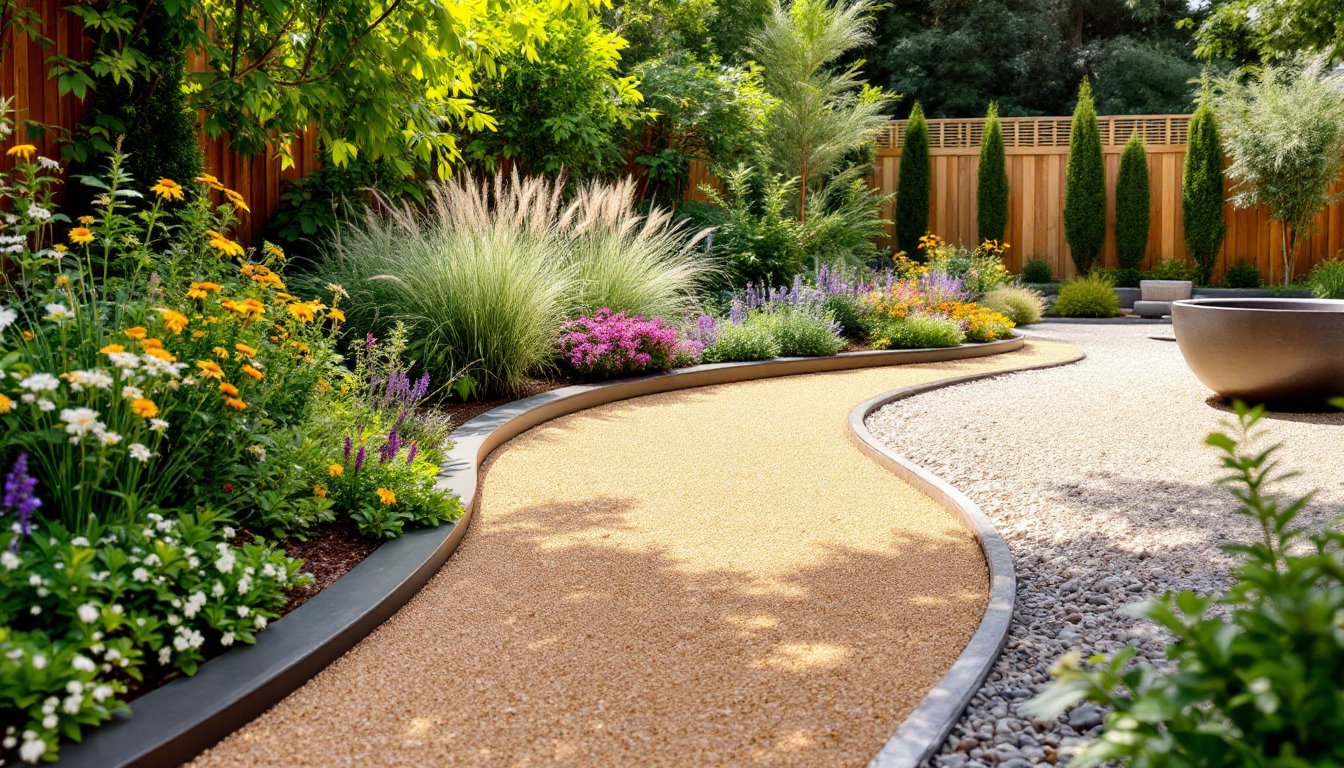
Gravel paths are the workhorse of budget hardscaping. ¾-inch crushed stone or pea gravel costs $30–$50 per ton (covering roughly 100 square feet at 2 inches deep). Crushed stone compacts better and resists shifting: pea gravel feels softer underfoot but migrates unless edged well.
Install landscape fabric beneath gravel to block weeds. Overlap seams by 6 inches and secure with landscape staples every 3 feet. Skip the fabric if you’re using mulch, it prevents organic material from enriching the soil below.
Mulch pathways work in low-traffic areas. Shredded hardwood or pine bark costs less than gravel and blends seamlessly into garden beds. Expect to top-dress every 12–18 months as it decomposes. Use small rocks for landscaping accents to define borders and prevent mulch migration.
Water-Saving Irrigation Tips for Busy Homeowners
Overwatering wastes money and encourages shallow root systems that demand constant moisture. A well-planned irrigation strategy cuts water use by 30–50% while keeping plants healthier.
Drip irrigation delivers water directly to root zones, minimizing evaporation and runoff. A basic kit (covering 100–150 square feet) runs $40–$80 and includes ½-inch main tubing, ¼-inch distribution lines, emitters, and stakes. Install emitters 12–18 inches apart for ground covers, 24 inches for shrubs. Run the system early morning to reduce fungal issues.
Soaker hoses are a cheaper alternative for linear beds. Expect $10–$20 per 50-foot hose. Bury them under 2 inches of mulch to slow evaporation. They don’t offer the precision of drip systems but work fine for native plantings that tolerate variable moisture.
Timers automate watering and prevent the “forgot to turn off the hose” scenario. Battery-operated hose-end timers cost $15–$30: multi-zone controllers with Wi-Fi start around $80. Adjust run times seasonally, most established natives need deep watering every 7–10 days in summer, less in spring and fall.
Rain barrels capture roof runoff for free irrigation. A 50–60 gallon barrel costs $60–$120: DIY versions using food-grade drums run cheaper. Position barrels on cinder blocks for gravity-fed pressure, and install an overflow hose to prevent foundation issues. Many municipalities offer rebates: check local water utility websites.
Group plants by water needs, hydrozoning, to avoid irrigating drought-tolerant natives alongside thirsty annuals. This alone can halve water waste. Design inspiration from homedit.com often highlights hydrozoning in modern landscapes.
DIY Projects That Add Character Without Ongoing Upkeep
A few well-placed DIY elements inject personality without creating maintenance burdens. Focus on durable materials and static features that weather gracefully.
Raised beds built from untreated cedar or composite lumber last 15–20 years with zero upkeep. Standard 2×10 or 2×12 boards (actual dimensions 1.5×9.25 or 1.5×11.25 inches) work for beds 12–24 inches tall. Assemble with 3-inch exterior screws at corners: no need for fancy joinery. Fill with a mix of 60% topsoil, 30% compost, and 10% perlite or coarse sand for drainage. Raised beds warm faster in spring, drain better, and reduce bending, worth the $100–$200 material cost for a 4×8-foot bed.
Gravel patios offer the look of a traditional patio at a fraction of the cost. Excavate 6–8 inches, lay compacted gravel base, top with 2–3 inches of decomposed granite or crushed stone fines, and wet-tamp with a hand tamper or plate compactor (rent for $60–$80/day). Edge with pressure-treated 4×4 timbers or steel. Total cost for a 10×12-foot area runs $200–$350 in materials.
Fire pits become focal points with minimal effort. A simple in-ground pit requires a 3-foot diameter excavation, 6 inches of pea gravel for drainage, and a steel fire ring ($40–$100). Surround with small rocks for accents or firebrick. Check local fire codes: many jurisdictions restrict open flames or require specific setbacks from structures.
Dry creek beds manage drainage while adding visual interest. Dig a shallow swale following the natural slope, line with landscape fabric, and fill with river rock (3–6 inch cobbles for the center, 1–3 inch stones along edges). This technique mimics natural waterways and directs runoff away from foundations. Material cost: $100–$200 for a 10-foot run.
Outdoor lighting on timers or solar power eliminates daily fussing. Solar path lights ($10–$20 each) need no wiring but offer limited brightness. For stronger illumination, run 12-volt low-voltage landscape lighting ($150–$300 for a starter kit with transformer, cable, and six fixtures). Bury cable 6 inches deep in conduit if crossing walkways: direct burial is fine elsewhere. Use LED bulbs (2–3 watts per fixture) for longevity.
For design ideas that blend function and aesthetics, resources like The Spruce provide extensive photo galleries and project walkthroughs. Many DIYers also draw inspiration from simple front yard solutions and adapt them to backyard contexts.
Safety note: Always call 811 before digging to locate underground utilities. Hitting a gas or electrical line turns a budget project into an emergency.