Potted plants offer an instant landscaping solution that doesn’t require digging, permits, or a six-month timeline. They work for renters who can’t alter the property, homeowners with concrete or poor soil, and anyone who wants maximum impact with minimal commitment. Containers let you test layouts, swap in seasonal color, and experiment with plants that wouldn’t survive in your native soil. This guide walks through everything from choosing the right pots to avoiding common watering mistakes that turn curb appeal into a weekly chore.
Table of Contents
ToggleKey Takeaways
- Front yard landscaping with potted plants eliminates the need for digging, permits, or soil amendments, making it ideal for renters and homeowners with poor soil or concrete yards.
- Choose containers with proper drainage holes (at least three ½-inch holes), select sizes between 14–24 inches in diameter, and group odd numbers of pots to create natural visual rhythm and maximum impact.
- Match plants to light exposure—full sun for lantana and sedums, part sun for hydrangeas, and shade for hostas—and use the thriller-filler-spiller formula to build depth and visual interest within each pot.
- Water container plants based on pot size and weather, refresh soil annually, and fertilize every two weeks during the growing season since nutrients leach faster in potted displays than in-ground beds.
- Avoid common mistakes like using garden soil instead of potting mix, overcrowding plants, and skipping drainage holes, which lead to root rot and poor performance.
- Rotate seasonal plantings from spring pansies through summer geraniums and fall mums to keep your front yard landscaping looking fresh without permanent landscaping commitments.
Why Choose Potted Plants for Your Front Yard
Container gardening solves problems that traditional in-ground planting can’t. If the house sits on compacted clay, shallow topsoil, or is bordered by mature tree roots, pots bypass all that hassle. Renters can take their plants when they move. Homeowners can shift pots to hide an ugly utility box one week and frame the front door the next.
Pots allow microclimate control. A shade-loving hosta thrives on the north side of the porch while sun-hungry geraniums bask near the driveway, both in containers filled with soil mixes tailored to their needs. This level of customization is nearly impossible with in-ground beds.
Portability means seasonal rotation without replanting. Swap spring pansies for summer petunias, then chrysanthemums in fall. Store empties in the garage over winter. That flexibility keeps the front yard looking fresh without the commitment of permanent landscaping.
Cost control is another advantage. A simple front of house transformation can start with three large pots and scale up as budget allows, versus the upfront expense of soil amendments, edging, mulch, and irrigation for beds.
Selecting the Right Containers for Maximum Impact
Material matters. Terracotta breathes well and looks classic but cracks in hard freezes and dries out fast in summer. Glazed ceramic holds moisture longer and handles frost better if rated for outdoor use. Resin and fiberglass planters mimic stone or concrete at a fraction of the weight, which helps when moving pots around. Actual concrete planters anchor a modern look but weigh 50+ pounds empty for anything over 18 inches.
Drainage is non-negotiable. Every container needs drainage holes. If a pot doesn’t have them, drill three to five ½-inch holes in the bottom. Standing water rots roots within days. Elevate pots on pot feet or bricks to prevent the drainage holes from sealing against pavement.
Size appropriately. Small pots (under 10 inches diameter) dry out too quickly for front yard use unless clustered and checked daily. Aim for 14 to 24-inch diameter containers as a baseline. Larger pots hold more soil, buffer temperature swings, and support bigger root systems. For trees or large shrubs, go 20+ gallons.
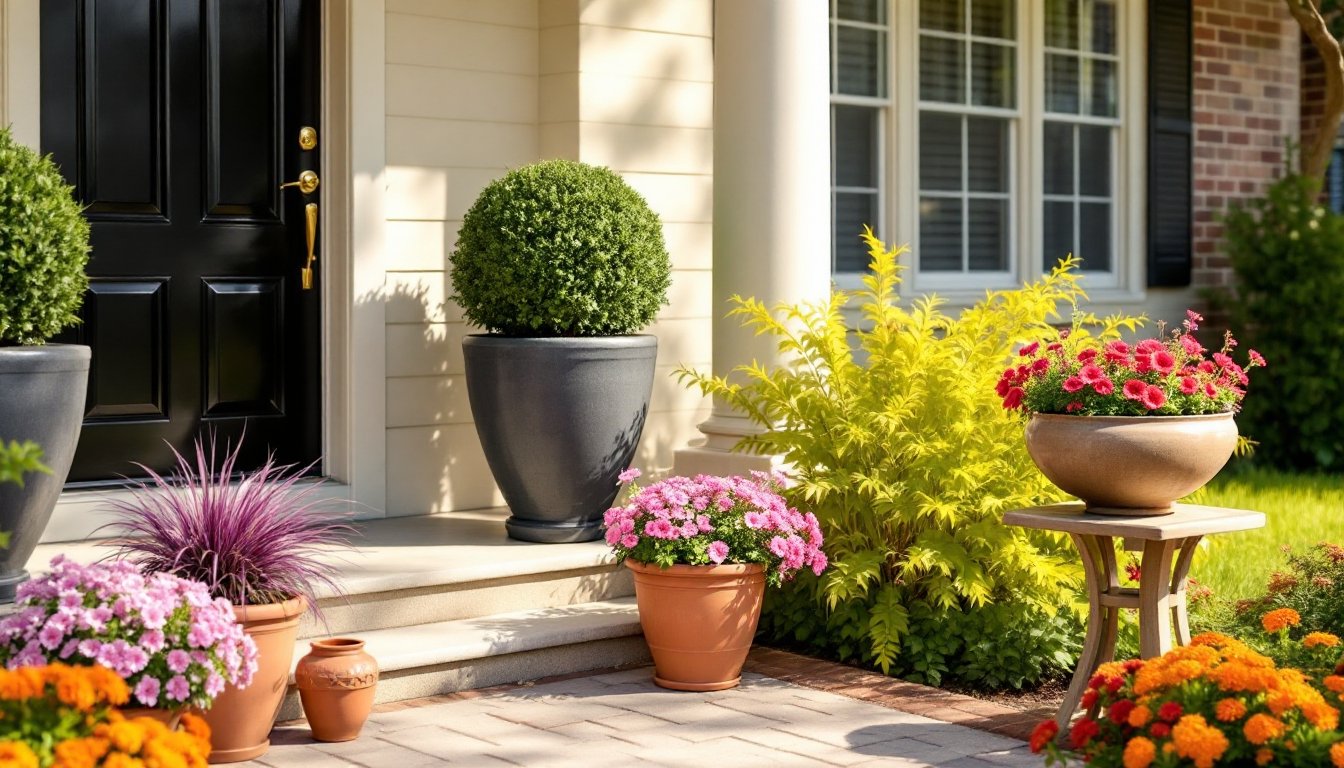
Color and texture should complement the home’s exterior. Neutral tones, charcoal, taupe, white, weathered stone, let plants pop and work across seasons. If the house is brick, terracotta echoes that warmth. For a modern home with metal accents, match finishes with gunmetal or matte black resin. Avoid busy patterns that compete with foliage.
Group odd numbers. Three or five pots create natural visual rhythm. Cluster different heights for depth: a tall urn flanked by shorter bowls, or a trio of cylinders in graduated sizes.
Best Plants for Front Yard Container Gardens
Evergreens provide year-round structure. Boxwood, Japanese holly, and dwarf Alberta spruce hold their shape through winter and serve as anchors in larger pots. These work well flanking a front door or anchoring corners. They tolerate root confinement better than many trees.
Perennials offer recurring color with less replanting. Hostas, coral bells, and ornamental grasses overwinter in containers if the pots are large enough (14+ inches) and insulated in cold zones. Daylilies and coneflowers handle full sun containers. In zone 7 and warmer, lavender and salvia thrive in pots with excellent drainage.
Annuals deliver nonstop blooms. Geraniums, petunias, marigolds, and zinnias flower from late spring through frost with regular deadheading. They’re ideal for front yard pots because they fill out fast and cover mistakes while perennials establish. For shade, try impatiens, begonias, or coleus for foliage interest.
Edibles add function. Compact tomato varieties, peppers, herbs like basil and rosemary, and even dwarf blueberries produce in pots. They’re conversation starters near the front walk and practical in small yards. Studies on container edibles show lush results with proper soil and feeding.
Tropical and tender plants bring drama in warm months. Elephant ears, cannas, and hibiscus make bold statements in summer containers. Move them indoors before frost or treat as annuals. Their large leaves balance architectural homes and soften hard surfaces like concrete stoops.
Match sun exposure. Full sun means six-plus hours of direct light, go with sun-lovers like lantana, verbena, or sedums. Part sun (three to six hours) suits hydrangeas and fuchsias. Shade containers (under three hours) need hostas, ferns, or heucheras.
Designing Your Front Yard Layout with Potted Plants
Start with focal points. The front door is the natural anchor. Flank it with matching large pots, 18 to 24 inches, planted with evergreens or tall grasses for symmetry. If the door sits off-center, balance with a grouping of three pots on the opposite side.
Layer heights for depth. Place tall pots (24+ inches) at the back or corners, medium (14 to 18 inches) in the middle ground, and low bowls or wide planters at the front. This creates a stepped silhouette that guides the eye and prevents a flat, one-dimensional look.
Use the thriller-filler-spiller formula. Each pot benefits from a tall focal plant (thriller), mid-height companions that fill space (filler), and trailing plants that cascade over the edge (spiller). For example: a purple fountain grass (thriller), petunias (filler), and trailing sweet potato vine (spiller).
Define edges and pathways. Line a front walk with evenly spaced pots every four to six feet, creating a rhythm that draws visitors to the door. Pots at the driveway edge soften hard transitions. A small house front yard benefits from this defined structure without permanent edging.
Consider sightlines from the street. Step back 30 feet and check your layout. Pots should frame the door, not block it or crowd windows. If the house has a porch, elevate some pots on plant stands to bring greenery to eye level.
Repeat colors and textures for cohesion. If one pot has chartreuse foliage, echo that color in another container across the yard. Repeating a pot material, all terracotta or all resin, unifies the design even when plant choices vary.
Seasonal Rotation and Maintenance Tips
Rotate plants by season to keep interest high. Spring: pansies, primroses, and tulip bulbs. Summer: geraniums, petunias, coleus. Fall: mums, ornamental kale, and asters. Winter: evergreen boughs, holly branches, or empty decorative containers with seasonal accents. Stores typically stock seasonal annuals six weeks before peak season.
Watering frequency depends on pot size and weather. Small pots (under 12 inches) may need daily water in summer heat. Large pots (20+ inches) can go two to three days. Stick a finger two inches into the soil, if it’s dry, water thoroughly until it drains from the bottom. Self-watering pots with reservoirs cut watering frequency in half.
Fertilize regularly since nutrients leach out faster in containers. Use a balanced slow-release granular fertilizer (like 10-10-10) mixed into soil at planting, or apply liquid fertilizer every two weeks during the growing season. Flowering annuals are heavy feeders and show results within days of feeding.
Refresh soil annually. Container soil compacts and loses structure after one season. Dump old soil into garden beds (if disease-free) and refill pots with fresh potting mix each spring. For perennials overwintering in pots, top-dress with two inches of fresh mix without disturbing roots.
Protect pots in winter. In zones 6 and colder, empty terracotta and ceramic pots or move them to a garage to prevent freeze-thaw cracking. Wrap large planters with bubble wrap or burlap if left outside. Mulch the soil surface of overwintering perennials with two to three inches of shredded bark.
Deadhead and prune to extend blooms. Pinch off spent flowers weekly on annuals like petunias and geraniums to encourage new buds. Trim back leggy growth mid-season to keep plants compact. Techniques for low-maintenance landscaping ideas apply equally to potted displays.
Common Mistakes to Avoid with Container Landscaping
Using garden soil instead of potting mix. Garden soil compacts in containers, suffocating roots and blocking drainage. Potting mix contains peat, perlite, and bark, ingredients that stay loose and drain well. It’s worth the extra $8 per bag.
Skipping drainage holes leads to root rot. Even if you add gravel at the bottom, water still pools without drainage. That myth about gravel improving drainage is backward, it actually raises the water table inside the pot. Drill holes or choose different containers.
Overcrowding plants. That lush nursery display was planted yesterday. Give plants room to grow. A 16-inch pot comfortably holds one thriller, two fillers, and one spiller, not eight packed annuals. Overcrowding invites disease and leggy growth as plants compete for light.
Ignoring mature size. A six-inch perennial at the garden center may spread to 24 inches by mid-summer. Check plant tags for mature width and plan accordingly. Dwarf and compact varieties exist for nearly every species and are bred for container life.
Underestimating water needs in hot weather. Containers dry faster than in-ground beds because roots can’t reach deep moisture. Black pots in full sun can hit 120°F, cooking roots if not watered properly. Lighter pot colors reflect heat. Grouping pots together creates a microclimate that holds humidity.
Neglecting to acclimate plants. Nursery plants come from controlled greenhouses. Harden them off by setting pots in partial shade for three to five days before placing in full sun. This prevents leaf scorch and transplant shock.
Forgetting fertilizer after the first month. That lush growth from the nursery runs on fertilizer already in the soil. Once it’s gone, plants stall. Set a phone reminder to feed every two weeks, or mix slow-release granules at planting.
Homeowners exploring modern landscaping ideas often overlook these container basics, but avoiding these mistakes ensures pots deliver the impact they promise.
Conclusion
Potted plants give immediate curb appeal with flexibility that in-ground landscaping can’t match. They adapt to changing tastes, seasonal color, and rental situations. With the right containers, appropriate plants, and consistent maintenance, a front yard can shift from forgettable to neighborhood-standout in a single afternoon. Start with three pots, master the basics, and expand as confidence grows.