Evergreens are the backbone of smart <a href="https://michubags.com/simple-front-of-house-landscaping/”>front yard design. While deciduous plants shed leaves and go dormant, evergreens deliver consistent color, structure, and privacy all twelve months. They’re not just filler, they’re workhorses that anchor foundation beds, screen unsightly views, and define property lines. Whether the goal is low-maintenance ground cover or a statement specimen, evergreens offer versatility that few plant categories can match. This guide covers practical, proven ideas for using evergreens to build curb appeal that lasts through every season.
Table of Contents
ToggleKey Takeaways
- Front yard evergreen landscaping provides year-round color and structure without seasonal leaf cleanup, significantly reducing maintenance time and creating consistent curb appeal.
- Layer evergreens by height in foundation plantings—using tall backdrop plants like arborvitae (6–10 feet), mid-height anchors like boxwoods (3–4 feet), and low edging (6–12 inches)—to create visual depth and avoid a flat appearance.
- Tall evergreens function as living privacy fences; choose dense species like Thuja Green Giant or Leyland cypress and space them 4–6 feet apart for a solid screen.
- Evergreen ground covers like creeping juniper and pachysandra eliminate mulch replacement and suppress weeds when planted 12–18 inches apart and installed with proper landscape edging.
- Mix ornamental specimen evergreens with seasonal bloomers using the thirds rule—approximately one-third evergreens and two-thirds seasonal plants—to maintain winter interest while showcasing spring and summer color.
- Match evergreen species to local hardiness zones and site conditions; most are drought-tolerant after 12–18 months and resist deer damage, making them ideal for suburban and rural landscaping.
Why Evergreens Are Perfect for Front Yard Landscaping
Evergreens solve several landscaping challenges at once. Their year-round foliage means no seasonal cleanup of fallen leaves, which cuts maintenance time significantly. Dense growth provides natural privacy screening and wind protection, making them ideal for properties near roads or neighbors.
From a design standpoint, evergreens create visual consistency. They hold their shape and color when deciduous plants go bare, preventing that “naked” winter yard look. This structural reliability makes them excellent backdrop plants for seasonal bloomers.
Most evergreens are drought-tolerant once established, typically after the first 12–18 months. Root systems run deep, reducing watering needs compared to shallow-rooted annuals. Many species also resist deer and common garden pests, which is a practical advantage in suburban and rural settings.
Climate adaptability is another strength. Cold-hardy evergreens like spruces and firs thrive in USDA zones 3–6, while broadleaf varieties such as camellias and hollies perform well in zones 7–9. Matching species to local hardiness zones ensures long-term survival without excessive winter protection.
Foundation Planting Ideas with Evergreens
Foundation plantings are the strip of landscape directly against the house, and evergreens excel here. The key is layering heights and textures to avoid a flat, monotonous look.
Layered Planting Strategy:
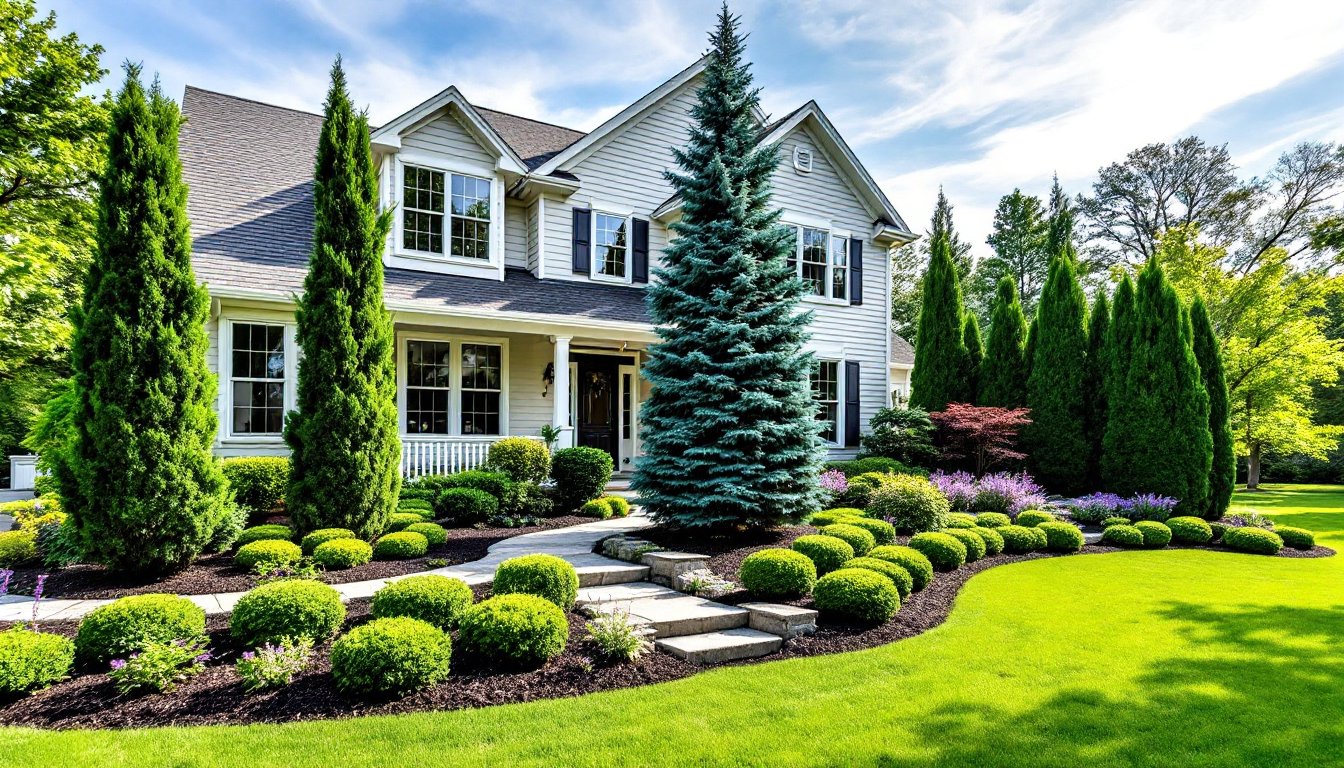
- Tall backdrop: Upright arborvitae or columnar junipers (6–10 feet mature height) placed at corners or beside entryways
- Mid-height anchor: Boxwoods, dwarf Alberta spruce, or yews (3–4 feet) centered under windows
- Low edging: Creeping juniper, pachysandra, or wintercreeper (6–12 inches) along the base
Maintain at least 18–24 inches of clearance between plantings and siding to allow airflow and prevent moisture damage. Evergreens grow slowly but steadily, a 2-foot boxwood can reach 4 feet in 8–10 years. Plan spacing based on mature width, not nursery size.
Foundation-Specific Choices:
- North-facing walls: Use shade-tolerant yews or hemlocks
- South/west exposures: Opt for heat-resistant junipers or mugo pines
- Under eaves with limited water: Plant drought-hardy varieties like Japanese yew or Oregon grape holly
Avoid planting directly over utility lines or HVAC vents. Many foundation plantings require coordination with grading to ensure proper drainage away from the structure.
Creating Privacy and Structure with Tall Evergreens
Tall evergreens function as living fences, and they’re often more effective, and permanent, than wood or vinyl. For screening, choose species that retain dense foliage to the ground and tolerate shearing if needed.
Top Privacy Evergreens:
- Leyland cypress: Fast-growing (3–5 feet per year), reaches 40–60 feet: needs annual pruning to control width
- Thuja Green Giant: Dense, pyramidal form: grows 3 feet annually: mature height 30–40 feet
- Eastern white pine: Soft-needled, flexible branching: reaches 50–80 feet: prefers well-drained soil
- Cryptomeria (Japanese cedar): Columnar habit, reddish winter color: grows 30–40 feet: thrives in moist sites
Spacing depends on desired density. For a solid screen, plant 4–6 feet on center. For a looser, staggered look, space 8–10 feet apart in alternating rows.
Structural Uses Beyond Screening:
Tall evergreens define property edges and create outdoor “rooms.” A row of arborvitae along one side of the yard establishes a visual boundary without a fence permit. Paired specimens flanking a driveway or walkway create symmetry and frame the approach to the house.
Be aware of mature size. A 60-foot spruce sounds appealing at 6 feet tall, but it will eventually dominate a small yard and shade out other plantings. Many homeowners underestimate growth rates and find themselves with low-maintenance options that become high-maintenance pruning projects.
Low-Maintenance Evergreen Ground Covers and Borders
Evergreen ground covers eliminate the need for mulch replacement and suppress weeds year-round. They spread horizontally, filling in bare spots and stabilizing soil on slopes.
Reliable Ground Cover Evergreens:
- Creeping juniper (Juniperus horizontalis): Tolerates poor soil and drought: varieties like ‘Blue Rug’ stay under 6 inches tall
- Pachysandra: Shade-tolerant broadleaf: spreads via rhizomes: reaches 6–8 inches
- Wintercreeper (Euonymus fortunei): Variegated foliage options: can climb if near structures: grows 6–12 inches
- Bearberry (Arctostaphylos uva-ursi): Native ground cover: red berries in fall: prefers acidic, sandy soil
Installation Tips:
Plant ground covers 12–18 inches apart in staggered rows. They’ll fill in within 2–3 growing seasons. Apply a 2–3 inch layer of shredded bark mulch between plants initially to suppress weeds until coverage is complete.
Edging is critical. Without a defined border, creeping varieties will invade lawns and flowerbeds. Install metal or plastic landscape edging at least 4 inches deep to contain spread.
Border Evergreens:
For a more formal edge, low-growing evergreens like dwarf mondo grass, creeping thyme, or blue fescue (technically evergreen in mild climates) provide tidy lines. These work well along walkways and driveways where mowing access is limited. According to naturally rounded varieties, certain compact evergreens maintain shape without shearing, reducing maintenance further.
Designing Focal Points with Ornamental Evergreens
Ornamental evergreens add drama and architectural interest. These are specimen plants, the kind that draw the eye and anchor a landscape bed.
Standout Ornamental Evergreens:
- Blue spruce (Picea pungens): Silvery-blue needles: pyramidal form: grows 50–75 feet (dwarf varieties available)
- Weeping Atlas cedar: Cascading branches: unique silhouette: reaches 10–15 feet with 20-foot spread
- Dwarf Alberta spruce: Compact cone shape: slow-growing (2–4 inches per year): ideal for small yards
- Japanese black pine: Irregular, sculptural branching: often trained in cloud-pruning style: grows 20–40 feet
Placement Strategies:
Place specimen evergreens where they have room to mature without crowding. Common focal point locations include:
- Lawn corners: A single blue spruce or weeping conifer creates a natural endpoint
- Entryway flanking: Matched pair of dwarf conifers frames the front door
- Island beds: Central placement in a mulched bed surrounded by lower perennials
Avoid planting too close to the house or walkways. A 15-foot evergreen needs a mature spread radius of 6–8 feet, plan accordingly. Most failures in small front yards happen when homeowners plant too many focal plants or place them too near structures.
Color and Texture Variety:
Ornamental evergreens come in shades beyond green. Golden varieties like ‘Gold Mop’ falsecypress or ‘Aurea’ juniper add warm tones. Blue-gray spruces provide cool contrast. Mixing needle textures, fine yew foliage against coarse pine needles, adds depth without relying on bloom cycles.
Combining Evergreens with Seasonal Plants for Visual Interest
Evergreens alone can look static. Pairing them with deciduous shrubs and perennials creates layers of seasonal color while maintaining year-round structure.
Effective Combinations:
- Spring: Plant daffodils, tulips, or bleeding heart at the base of evergreen shrubs. The green backdrop highlights blooms.
- Summer: Pair evergreens with hydrangeas, daylilies, or ornamental grasses. The contrast between rigid conifers and flowing grass creates movement.
- Fall: Underplant with asters, sedum, or ornamental kale. Their late-season color pops against dark green foliage.
- Winter: Add red-twig dogwood or winterberry holly near evergreens. Bright stems stand out against snow and evergreen needles.
Design Principle: Thirds Rule:
Aim for roughly one-third evergreens, two-thirds seasonal plants in mixed beds. This ratio ensures winter interest without overwhelming spring and summer displays. Evergreens provide the bones: seasonal plants add the flesh.
Mulch and Edging:
Use consistent mulch across mixed beds to unify the look. Shredded hardwood or pine bark works well under both evergreens and perennials. Edge beds with natural stone or steel for clean separation from lawn areas.
Many resources like The Spruce offer detailed companion planting charts that help match bloom times and light requirements. Pairing the right plants reduces competition for water and nutrients.
Conclusion
Evergreens deliver practical benefits and aesthetic appeal that few plant types can match. From foundation beds to privacy screens, they anchor landscapes with reliable structure and minimal upkeep. The key is matching species to site conditions, planning for mature size, and integrating them thoughtfully with seasonal plants. With proper selection and spacing, evergreens transform front yards into polished, year-round landscapes that require less effort and deliver consistent results.