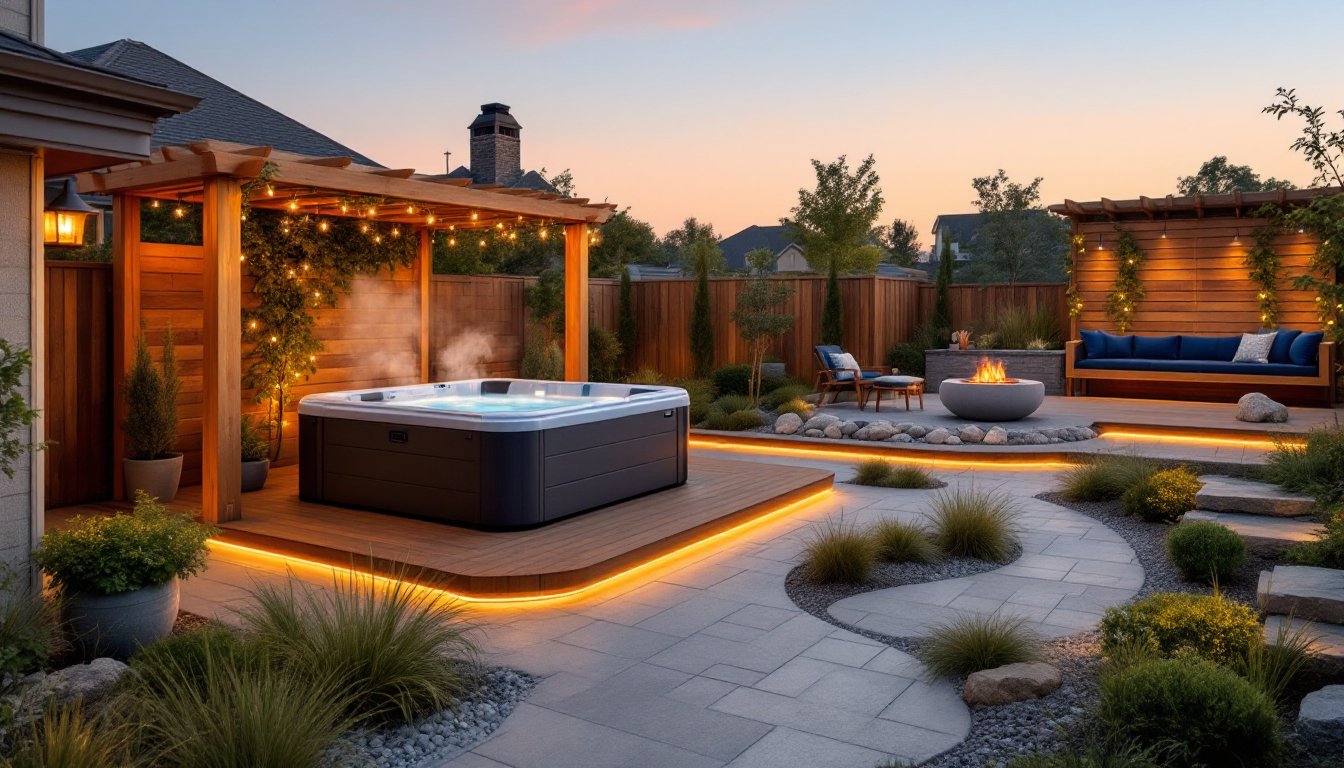
A hot tub is only as relaxing as the space around it. Sure, the jets and heat do their job, but if the tub’s sitting on a bare concrete pad next to a chain-link fence, the vibe falls flat. Good landscaping turns a backyard hot tub from an appliance into a retreat, privacy, ambiance, safe footing, and visual interest all matter. This guide covers practical ways to upgrade the area around a hot tub, from decking and screening to plants, lighting, and hardscape. Whether working with a tight budget or planning a full overhaul, these ideas focus on real materials, real measurements, and real-world results.
Table of Contents
ToggleKey Takeaways
- Backyard hot tub landscaping transforms your spa from an appliance into a retreat by combining privacy screening, proper drainage, and ambient design elements that enhance both safety and relaxation.
- Invest in slip-resistant flooring such as composite decking ($3–$6 per linear foot), pavers, or textured concrete to prevent accidents around water-exposed areas.
- Create privacy using wood fences (6 feet tall), lattice panels with climbing vines, bamboo screening, or overhead pergolas to block sightlines and improve the intimate atmosphere.
- Layer multiple lighting sources—low-voltage LED landscape lights, string lights, and recessed deck fixtures—while ensuring GFCI protection and compliance with electrical codes for safe evening use.
- Select low-maintenance plants like ornamental grasses, evergreen shrubs, and tropical perennials that tolerate humidity and heat while planted at least 3 feet from the hot tub for proper airflow and access.
- DIY-friendly options like pea gravel pathways, pallet furniture, and potted plant groupings deliver professional-looking results on a modest budget while prioritizing structural safety and drainage.
Creating Privacy Around Your Hot Tub
Privacy transforms a hot tub from exposed to intimate. Nobody wants the neighbors watching them soak. The most common approach is vertical screening, fences, lattice panels, or living walls.
Wood privacy fences (typically 6 feet tall) use standard 4×4 posts set in concrete and 1×6 or 1×8 boards. Use pressure-treated lumber rated for ground contact (marked .40 or higher) for posts. Cedar or composite boards handle moisture and UV better than untreated pine. Space posts no more than 8 feet apart for stability.
Lattice panels offer semi-privacy and airflow. Mount them atop a 3- to 4-foot solid fence or attach them to free-standing frames. Train climbing vines like clematis or jasmine for a living screen. Remember that lattice alone won’t block sightlines, it’s decorative unless paired with dense foliage.
Bamboo screening installs quickly. Roll-style bamboo fencing attaches to existing posts or frames with zip ties or wire. It’s lightweight and budget-friendly but may need replacement every 3 to 5 years due to weather exposure. For a permanent privacy solution, consider running bamboo (clumping varieties like Fargesia) planted in 15-gallon containers to avoid invasive spread.
Pergolas and shade structures add overhead privacy from upper-story windows. Use 4×4 or 6×6 posts and 2×6 or 2×8 rafters. Hang outdoor curtains or install louvered panels for adjustable coverage. Check local codes, structures over 120 square feet often require permits.
Choosing the Perfect Flooring and Decking Materials
The surface around a hot tub takes constant abuse, water splashes, foot traffic, freeze-thaw cycles. It needs traction, drainage, and durability.
Composite decking is the most popular choice. Brands like Trex or TimberTech resist rot, splinters, and fading. Standard board widths are 5.5 inches (actual): plan for 16-inch joist spacing. Install with a 1–2% slope away from the tub for drainage. Composite costs $3–$6 per linear foot (material only) depending on grade.
Pressure-treated lumber is cheaper ($1.50–$2.50 per linear foot) but requires annual sealing. Use 5/4×6 decking boards (actual thickness 1 inch) over joists spaced 12 inches on center for hot tub support. Always use galvanized or stainless fasteners near water.
Pavers and natural stone handle moisture well and offer slip resistance. Flagstone or slate pavers work beautifully for rustic settings. Set pavers on a 4-inch compacted gravel base topped with 1 inch of leveling sand. Leave 1/4-inch joints for drainage and fill with polymeric sand to lock them in place. Expect $8–$20 per square foot installed, depending on stone type.
Pea gravel is a budget option at $40–$60 per ton (covers about 80 square feet at 3 inches deep). Install landscape fabric underneath to prevent weeds. Gravel drains instantly but can be uncomfortable barefoot, pair it with stepping stones.
Avoid smooth concrete or tile near a hot tub. Both become dangerously slippery when wet. If pouring concrete, add a broom finish or aggregate texture for grip.
Incorporating Plants and Greenery for Natural Ambiance
Plants soften hardscape, add color, and help with privacy. But not every plant belongs near a hot tub. Avoid varieties that drop excessive leaves, attract bees, or have thorns.
Best plant choices include ornamental grasses (like Miscanthus or Pennisetum), evergreen shrubs (Boxwood, Yew, Arborvitae), and tropical-looking perennials (Canna lily, Elephant ear, Bird of paradise). These tolerate humidity and heat splashes.
Container planting works well for flexibility. Use 12- to 20-gallon pots with drainage holes. Fill with quality potting mix (not garden soil) and add slow-release fertilizer. Containers let you move plants seasonally or swap out tired specimens.
Raised planter beds built with 4×4 or 6×6 timbers create defined zones. Line beds with landscape fabric and fill with a mix of topsoil and compost. Keep soil level 2–3 inches below the top edge to prevent runoff.
Space plants appropriately. Shrubs should sit at least 3 feet from the hot tub to allow airflow and maintenance access. Many DIYers integrate patio landscaping to create a cohesive flow between hot tub and lounging areas.
Avoid plants with invasive roots (Willows, Poplars, Bamboo runners) near plumbing or electrical lines. Also skip high-maintenance varieties that need constant deadheading or pest control. Low-maintenance landscaping keeps the focus on relaxation, not chores.
Lighting Solutions for Evening Relaxation
Good lighting extends hot tub use into the evening and adds safety. A mix of ambient, task, and accent lighting works best.
Low-voltage LED landscape lighting (12V) is the safest choice near water. Kits include a transformer (typically 150–300 watts), cable, and fixtures. Bury cable 6 inches deep in conduit or use direct-burial-rated wire. Space path lights 8–10 feet apart along walkways.
String lights add instant ambiance. Use outdoor-rated bulbs (look for wet or damp location ratings) and hang them on pergola beams, fence posts, or shepherd hooks. LED Edison-style bulbs use 90% less energy than incandescent and last 15–25 times longer.
Recessed deck lights install flush with decking or stair risers. Most require a 2-inch hole and sit on joist edges. Use IP65-rated fixtures to handle water exposure. Wire them in series to a single transformer.
Solar lights are easy to install but less reliable. They work well for accent lighting around plantings but don’t produce enough lumens for task lighting. Expect 4–8 hours of illumination on a full charge.
Expert guides on landscape lighting design suggest layering multiple sources for depth and avoiding harsh overhead lights that create glare.
Electrical safety is non-negotiable. Hot tub areas require GFCI protection on all circuits within 20 feet. Hire a licensed electrician for any permanent wiring. The National Electrical Code (NEC) Article 680 governs spa and hot tub installations. Don’t run extension cords to temporary lights, they’re a code violation and a shock hazard.
Adding Hardscape Features and Pathways
Hardscape defines space and improves functionality. Pathways, walls, and seating areas turn a hot tub zone into a complete outdoor room.
Pathways should be at least 3 feet wide for comfortable access. Use the same material as the hot tub surround for continuity, or mix materials for contrast, flagstone path over gravel, for example. Edge pathways with steel or aluminum landscape edging (not plastic, which shifts) and secure with 10-inch stakes every 3 feet.
Retaining walls help with grade changes and create tiered planting beds. Concrete retaining blocks (like Allan Block or Versa-Lok) are DIY-friendly. Each block weighs 40–80 pounds and interlocks without mortar. Walls under 3 feet typically don’t need engineering, but check local codes. Always add a gravel base (4–6 inches compacted) and backfill with drainage rock to prevent frost heave.
Fire pits extend the season. Maintain at least 10 feet of clearance between the fire pit and the hot tub, both for safety and to avoid smoke blowing into the tub. Pre-cast concrete fire rings cost $150–$300 and install in an afternoon. Natural gas or propane models require professional hookup.
Built-in seating maximizes space. Frame benches with 2×4 or 2×6 lumber and top with composite or cedar decking. Standard seat height is 18 inches: depth should be 15–18 inches. Add waterproof cushions for comfort.
Design inspiration from Homedit showcases creative hardscape integrations that balance form and function. Just remember: pretty doesn’t matter if it’s unsafe or unstable.
Budget-Friendly DIY Landscaping Projects
Not every upgrade requires a contractor or a four-figure budget. These DIY projects deliver impact without very costly.
Pallet furniture costs next to nothing. Source heat-treated pallets (stamped HT, never MB for methyl bromide) from local businesses. Sand them smooth, seal with exterior stain, and stack or arrange as side tables or storage. Two pallets and four casters make a rolling towel cart.
Pea gravel pathways cost about $50 for a 10-foot path, 3 feet wide. Excavate 3 inches deep, lay landscape fabric, and pour gravel. Edge with pressure-treated 2×4s staked in place.
DIY privacy screens can be built with 1×4 furring strips arranged in a vertical slat pattern. Mount strips on a 2×4 frame with 2-inch gaps for airflow. Stain or paint to match existing fences. Material cost for a 4×6-foot panel runs $40–$70.
Potted plant groupings create a lush look for under $100. Buy 4-inch perennials (not 1-gallon specimens) and transplant into larger pots. Use a mix of heights and textures. When working with side yard constraints, containers offer flexibility to shift arrangements as needed.
Repurposed stone edging from Craigslist or salvage yards can replace store-bought materials. Clean and reuse bricks, pavers, or flagstone for pathways or borders.
Safety note: Budget doesn’t mean skipping essentials. Always use proper PPE, gloves for handling treated lumber, safety glasses for cutting, and dust masks when working with concrete or stone dust. And if a project involves structural support (like a deck around a 400-gallon hot tub weighing 4,000+ pounds when full), don’t cheap out on materials or engineering.
Conclusion
Landscaping around a hot tub isn’t just cosmetic, it’s about creating a functional, private, and safe space that extends the investment. From selecting slip-resistant surfaces to installing code-compliant lighting, each decision impacts long-term usability and enjoyment. Start with the essentials (privacy, safe footing, drainage) and layer in plants, lighting, and hardscape as budget allows. With the right materials and a bit of sweat equity, a backyard hot tub becomes the outdoor retreat it’s meant to be.