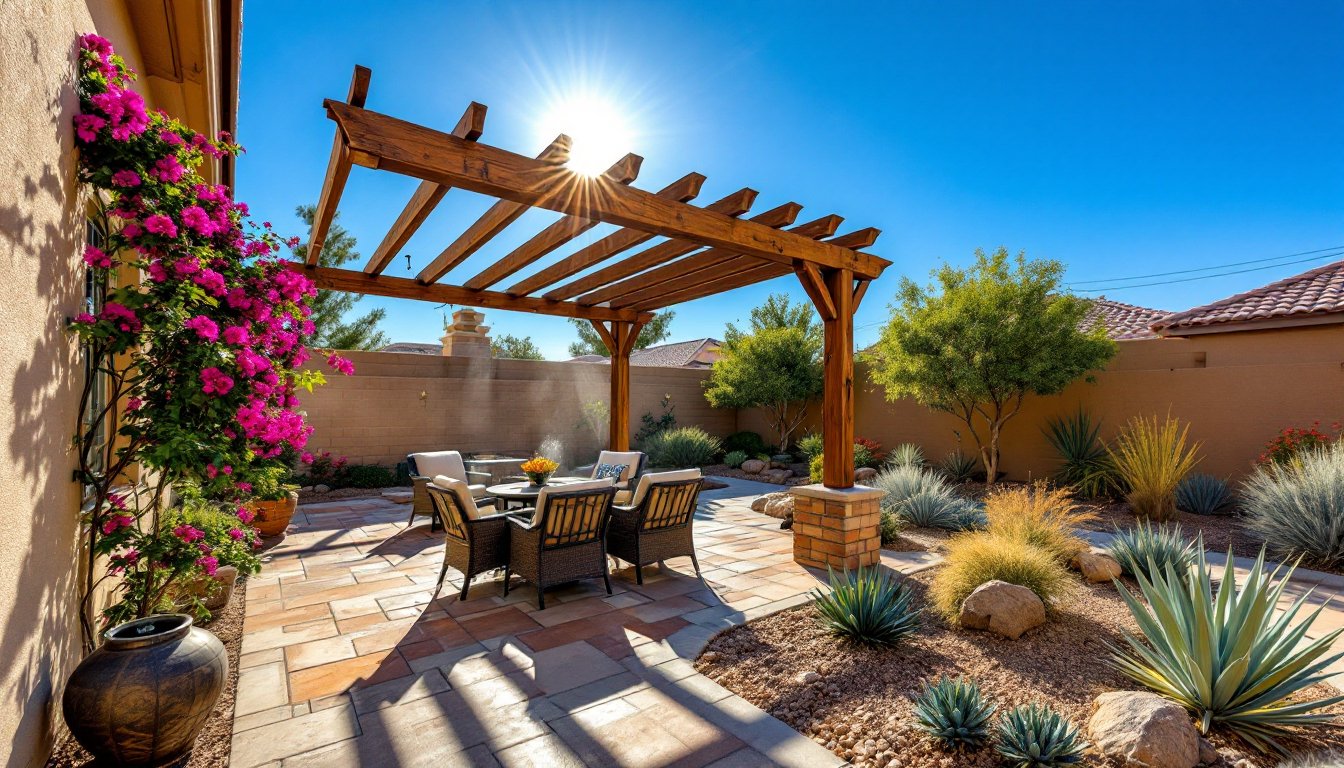
Las Vegas isn’t just about casinos and neon lights, it’s also about scorching summers, alkaline soil, and about 4 inches of annual rainfall. If you’re planning backyard landscaping in this desert environment, you’ll need more than a sprinkler and some petunias. The good news? With the right plants, smart water management, and hardscaping that works with the heat instead of against it, your outdoor space can be both stunning and sustainable. This guide walks you through the practical steps to create a low-maintenance, drought-smart backyard that thrives in the Mojave Desert.
Table of Contents
ToggleKey Takeaways
- Las Vegas backyard landscaping requires addressing unique desert challenges: extreme heat (105–115°F summers), caliche soil layers that block drainage, and alkaline pH that locks up nutrients.
- Drought-tolerant plants like palo verde, Texas ranger, lantana, and desert willow thrive in Las Vegas with minimal water once established, while turf should be limited to under 200 square feet using heat-tolerant varieties like Bermuda grass.
- Drip irrigation systems with pressure-compensating emitters reduce evaporation by up to 50% compared to sprinklers and qualify for water conservation rebates through the Southern Nevada Water Authority.
- Hardscaping features such as flagstone patios, decomposed granite pathways, and decorative rock eliminate ongoing maintenance while withstanding intense UV exposure and temperature swings.
- Shade structures like pergolas, shade sails, and strategically planted trees can reduce patio temperatures by 15–20°F and are essential for comfort and furniture preservation in Las Vegas summers.
- Low-maintenance backyard landscaping succeeds through hydrozoning (grouping plants by water needs), mass plantings of single species, heavy mulching, and automating irrigation and lighting systems.
Understanding Las Vegas Climate and Soil Conditions
Las Vegas sits in USDA Hardiness Zone 9a, with summer temperatures regularly hitting 105–115°F and winter lows dipping to the mid-30s. The city receives an average of 4 inches of rainfall annually, mostly between November and March. That means your landscape will be fighting heat, UV exposure, and drought for most of the year.
The soil here is another challenge. Most residential properties sit on caliche, a cement-like layer of calcium carbonate that forms about 6–18 inches below the surface. It’s nearly impermeable, so water pools on top instead of draining. Native soil is also highly alkaline, with pH levels between 7.5 and 8.5, which locks up nutrients like iron and nitrogen.
Before planting anything, dig a test hole about 2 feet deep to check for caliche. If you hit a rock-hard layer, you’ll need to break it up with a pickaxe or rent a jackhammer for larger areas. Amend the top 12 inches of soil with sulfur or gypsum to lower pH slightly, and add compost to improve texture and water retention. For desert-adapted plants, you can skip heavy amendments, they’re built to handle poor soil.
Don’t assume your backyard drains like a typical yard. If water sits for more than a few hours after irrigation, you’ve got a caliche problem. Address it early, or you’ll be replanting drowned shrubs every season.
Choosing Drought-Tolerant Plants for Your Las Vegas Backyard
Forget about Kentucky bluegrass and azaleas. In Las Vegas, your plant palette should lean heavily on xeriscape species, plants that evolved in arid climates and need minimal supplemental water once established.
Start with native and desert-adapted trees like palo verde, desert willow, and mesquite. These provide shade without guzzling water. For screening or privacy, try Texas ranger (Leucophyllum) or red yucca, both of which handle full sun and reflected heat from block walls.
Shrubs and perennials that perform well include lantana, desert marigold, brittlebush, and yellow bells (Tecoma stans). These bloom reliably, attract pollinators, and need watering once or twice a week in summer, far less than traditional ornamentals. Avoid planting them too close together: overcrowded plants compete for water and airflow, leading to disease and stress.
Succulents and cacti are obvious choices but use them strategically. Agave, aloe, and barrel cactus work well as focal points or in rock gardens. Pair them with decomposed granite or river rock mulch to reflect the desert aesthetic without looking like a cliché.
If you want a small patch of turf, consider Bermuda grass or buffalo grass, both tolerate heat and require far less water than cool-season varieties. Keep turf areas small (under 200 square feet) and use them where they’ll actually be used: a play area or pet zone, not as filler.
Water-Saving Irrigation Systems and Techniques
In a city where water costs are rising and conservation rebates are common, efficient irrigation isn’t optional, it’s essential. Ditch the oscillating sprinkler and install a drip irrigation system with pressure-compensating emitters. Drip systems deliver water directly to root zones, reducing evaporation by up to 50% compared to overhead sprinklers.
Use ½-inch polyethylene tubing as your mainline and run ¼-inch spaghetti lines to individual plants. Space emitters 12–18 inches apart for shrubs and trees, adjusting flow rate (0.5 to 2 gallons per hour) based on plant size. Retrofit the system with a smart irrigation controller that adjusts watering schedules based on weather data, many qualify for rebates through the Southern Nevada Water Authority.
Water deeply but infrequently. Desert plants develop deep root systems when they’re forced to reach for moisture. For established xeriscape plants, irrigate every 7–10 days in summer, less in cooler months. New plantings need more frequent watering for the first year, about three times per week in summer, then you can cut back.
Mulch every planting bed with 2–3 inches of decomposed granite or wood chips to slow evaporation and moderate soil temperature. Keep mulch a few inches away from plant stems to prevent rot. On slopes or areas prone to runoff, consider installing basin irrigation, small berms around each plant that capture water and let it soak in slowly.
Check your system monthly for clogged emitters, leaks, or lines chewed by wildlife. A single broken line can waste hundreds of gallons before you notice.
Hardscaping Ideas Perfect for Desert Landscapes
When living ground cover dies by July, hardscaping becomes your best friend. Patios, pathways, and rock features don’t need water, don’t attract pests, and hold up under UV punishment that would bleach most materials.
Start with a flagstone or concrete paver patio. Flagstone in earth tones (buff, rust, gray) blends naturally with the desert palette. Lay it on a 4-inch compacted base of decomposed granite (DG), with polymeric sand or mortar in the joints. For a budget option, poured concrete with a broom or stamped finish works well, just add control joints every 8–10 feet to manage cracking from temperature swings.
Pathways can be simple: 3-foot-wide trails of DG bordered by steel edging or flagstone steppers. DG compacts hard, drains well, and costs about $40–$50 per cubic yard. Avoid pea gravel in high-traffic areas, it shifts underfoot and migrates into turf or planting beds.
Incorporate decorative rock as ground cover in non-planted zones. River rock (2–4 inch) and crushed red rock both look sharp and reduce heat reflection compared to bare dirt. Install landscape fabric underneath to suppress weeds, and edge beds with steel or stone borders to keep rock from creeping into the yard.
Outdoor kitchens and fire pits are popular for <a href="https://michubags.com/landscaping-around-patio/”>landscaping around patios in desert climates, where evenings are pleasant from October to April. Build with block or stone veneered over a poured concrete base. Run gas lines for built-in grills or fire features, DIY is possible if you’re comfortable with black iron pipe, but most jurisdictions require a licensed plumber for final inspection.
For slopes or erosion-prone areas, dry-stack retaining walls using natural stone or concrete block. Walls under 4 feet typically don’t need engineering, but anything taller or load-bearing should be reviewed by a structural engineer.
Creating Shade and Cooling Elements
Shade isn’t just comfort, it’s survival. Unshaded patios in Las Vegas can hit 140°F in July, hot enough to blister skin and warp furniture. Prioritize shade structures and cooling elements early in your design.
Shade sails are a fast, affordable option. Install marine-grade fabric sails on steel posts or anchor to fascia and perimeter walls. Use triangle or rectangle configurations to cover patios or play areas. Sails provide 90%+ UV block and last 5–10 years before needing replacement.
For permanent shade, build a ramada or pergola using pressure-treated 6×6 posts and 2×8 or 2×10 rafters. Space rafters 16–24 inches apart for partial shade, or install a polycarbonate or lattice roof for more coverage. Anchor posts in concrete footings at least 24 inches deep. Don’t rely on surface-mount hardware, the wind can gust over 40 mph during monsoon season.
Vines like bougainvillea or trumpet vine can grow over pergolas, adding living shade and color. They need weekly water in summer but handle the heat. Use galvanized wire or heavy twine as support until vines grab the structure.
Misters mounted to pergola beams or patio covers can drop ambient temperature by 15–20°F. Use a high-pressure misting system (1,000 PSI) to create fine droplets that evaporate before they soak furniture. Expect to pay $300–$600 for a DIY kit covering a 10×12 patio. Run mister lines off a hose bib or dedicated irrigation zone.
Plant shade trees on the west and south sides of your yard to block afternoon sun. A mature palo verde or mesquite can shade 400–600 square feet. Don’t plant within 10 feet of your home’s foundation, desert trees have aggressive roots that will find water lines and crack slabs.
Consider installing a water feature with a recirculating pump, the sound and evaporative cooling create a microclimate. Keep it simple: a bubbling urn or small fountain. Elaborate pond landscaping ideas can work but require more maintenance in dusty, high-evaporation conditions.
Low-Maintenance Design Strategies for Busy Homeowners
If you’re not interested in weekend garden chores, design your landscape to run on autopilot. Focus on plant selection, smart layouts, and minimal turf.
Group plants by water needs, this is called hydrozoning. Put thirsty ornamentals near the house where you can monitor them easily, and place xeric plants in outlying areas. Segregating irrigation zones by plant type prevents overwatering cacti or underwatering accent shrubs.
Eliminate or minimize turf. Grass demands mowing, edging, fertilizing, and the most water in your landscape. If you need a lawn, limit it to under 200 square feet and use warm-season varieties like Bermuda. The rest of your yard can be rock, mulch, or groundcovers like trailing lantana or desert zinnia.
Use low-maintenance landscaping techniques like mass plantings of a single species, say, rows of Texas ranger or clusters of agave. This reduces visual clutter, simplifies irrigation, and cuts down on plant-specific care.
Mulch heavily. As noted earlier, 2–3 inches of mulch reduces weeds, conserves moisture, and keeps soil cooler. Refresh mulch annually, it breaks down faster in the heat.
Automate everything you can. Smart controllers, drip timers, and low-voltage landscape lighting on photocells all reduce hands-on work. LED path lights and uplights cost about $15–$40 per fixture and last years without bulb changes.
Skip high-maintenance features like annual flower beds, which need replanting twice a year. Stick with perennials and shrubs that bloom seasonally without babying. For advice on simpler designs, resources like The Spruce and Gardenista offer desert-friendly plant lists and layout inspiration.
Finally, plan for dust and debris. Use hard borders between rock and turf to make edging easier, and install a leaf blower station near your back door, you’ll use it weekly to clear patios and walkways.
Conclusion
Landscaping in Las Vegas is about working with the desert, not against it. Choose drought-tolerant plants, install efficient irrigation, lean on hardscaping, and design for low maintenance. With the right approach, you’ll have a backyard that looks great year-round without draining your water bill or your weekends.