A mirror in a small entryway isn’t just decorative, it’s one of the most effective tools for making a cramped space feel twice its size. The right mirror bounces light, creates depth, and gives you a last-minute check before heading out the door. In tight quarters, though, picking the wrong style or mounting it in the wrong spot can clutter instead of clarify. This guide walks through mirror styles, placement strategies, and creative installations that maximize both function and visual impact without sacrificing precious square footage.
Table of Contents
ToggleKey Takeaways
- Small entryway mirror ideas amplify light and create the illusion of depth, making cramped spaces feel significantly larger without requiring costly renovations or electrical upgrades.
- Round, oval, and slim vertical mirrors are ideal for compact entryways because curved designs soften boxy spaces while vertical styles draw the eye upward and add perceived height.
- Mount mirrors at eye level (57 to 65 inches from floor) opposite windows or light sources, and avoid positioning them across cluttered areas to maximize reflective impact and prevent visual clutter.
- Combine mirrors with functional elements like floating shelves, wall hooks, and coat racks to maximize every inch of space while keeping the mirror as the focal point rather than competing with too many design pieces.
- DIY framing projects—such as reclaimed wood borders, vintage window frames, or mosaic tiles—personalize mirror installations while saving money compared to pre-framed options.
Why Every Small Entryway Needs a Mirror
Mirrors amplify natural and artificial light by reflecting it back into the room. In a narrow hallway or compact foyer with limited windows, a well-placed mirror can double the perceived brightness without adding fixtures. This is especially valuable in rentals or older homes where electrical upgrades aren’t feasible.
They also create the illusion of depth. A mirror positioned opposite a doorway or window visually extends the sightline, tricking the eye into reading the space as larger than its actual dimensions. This works particularly well in entryways shorter than six feet in length.
From a functional standpoint, an entryway mirror handles last-minute adjustments, checking your collar, smoothing your hair, or confirming your keys are in hand. Mounting one near the door reduces the scramble before you leave and keeps routines efficient.
Finally, mirrors act as focal points in otherwise plain spaces. A statement frame or interesting shape draws attention upward and away from cramped floor areas, adding personality without the footprint of bulky furniture.
Best Mirror Styles for Compact Entryways
Round and Oval Mirrors for Softening Tight Spaces
Round and oval mirrors eliminate sharp corners, which helps small entryways feel less boxy. A 24- to 30-inch diameter round mirror provides enough reflective surface without overwhelming a narrow wall. The curved silhouette contrasts with rectangular door frames and baseboards, creating visual interest.
Frameless designs with beveled edges work well in modern or minimalist interiors. For traditional or farmhouse aesthetics, look for frames in natural wood, black metal, or antique brass. Metal frames typically add 1 to 2 inches to the overall diameter, so account for that when measuring wall space.
Oval mirrors suit slightly wider entryways or walls adjacent to staircases. Their vertical orientation adds height while maintaining the softness of a curve. Mount them centered above a slim console or bench to anchor the composition.
Slim Vertical Mirrors to Add Height
Vertical mirrors draw the eye upward, making low ceilings feel taller. A 12- to 18-inch-wide full-length mirror works in entryways as narrow as 36 inches without encroaching on traffic flow. Lean it against the wall if mounting isn’t an option, just secure the top with wall anchors or anti-tip brackets to prevent tipping (especially in homes with kids or pets).
Narrow framed mirrors in widths of 8 to 12 inches can be grouped in pairs or trios for a gallery-wall effect. Stagger their heights or align the tops for a cleaner look. This approach spreads reflective surface across more wall area without the visual weight of one large piece.
For entryways with doors that swing inward, a slim vertical mirror mounted on the back of the door or on an adjacent wall keeps the floor clear. Use heavy-duty adhesive hooks rated for the mirror’s weight, or mount with screws into solid wood doors, avoid hollow-core doors unless you use toggle anchors designed for them.
Strategic Placement Tips for Maximum Impact
Hang mirrors opposite windows or glass doors to maximize natural light reflection. If your entryway opens directly to the outdoors, position the mirror on a side wall rather than facing the door, this avoids bouncing light back outside and keeps the reflection from disorienting guests as they enter.
Mount mirrors at eye level for the household’s average height, typically 57 to 65 inches from the floor to the center of the mirror. In homes with vaulted or high ceilings, you can cheat slightly higher, but avoid placing mirrors so high they reflect only the ceiling.
Leave at least 4 to 6 inches of clearance between the mirror’s bottom edge and any furniture below it, such as a console table or bench. This prevents the mirror from feeling cramped and allows room for décor like a tray for keys or a small plant.
Avoid placing mirrors directly across from cluttered areas like coat racks or shoe piles. The reflection will amplify the mess rather than enhance the space. If storage is unavoidable in your entryway, position the mirror to reflect a cleaner sightline, perhaps a piece of artwork, a window, or a well-styled shelf.
In entryways with multiple doorways or openings, mount the mirror on the longest uninterrupted wall. This gives you the most flexibility for size and prevents the mirror from competing with architectural elements. Some homeowners find that small space strategies help guide placement decisions in tight layouts.
Creative DIY Mirror Projects for Small Entryways
Building a frame for a frameless mirror personalizes the look and saves money compared to buying pre-framed options. Purchase a basic mirror cut to size at a glass shop (they’ll polish the edges for safety). Use 1×2 or 1×3 pine boards to build a simple frame with mitered corners. Secure the frame pieces with wood glue and 1¼-inch brad nails, then attach the mirror to the back using construction adhesive or mirror clips.
For a rustic or industrial vibe, frame a mirror with reclaimed wood planks or galvanized metal angle brackets. Sand the wood smooth if it’s rough-sawn, and seal it with polyurethane to prevent splinters and moisture damage. Metal frames may need primer and spray paint if the finish is uneven, Rust-Oleum Universal works well on mixed materials.
Turn a vintage window frame into a mirror by removing the glass panes and replacing them with mirror tiles cut to fit. You can buy mirror tiles in standard sizes (often 12×12 inches) at home centers. Secure them with mirror adhesive or double-sided mounting tape rated for glass. Hang the frame using heavy-duty picture hooks or D-rings screwed into the frame’s back stiles.
Mosaic or tiled mirror frames add texture without taking up extra space. Buy a plain round mirror and surround the edge with adhesive-backed glass tiles, small pebbles, or broken ceramic pieces arranged in a pattern. Grout the gaps with unsanded grout (better for tight spaces), and seal with a grout sealer once dry. This technique is forgiving for beginners and lets you customize colors to match your entryway palette.
Safety note: Always wear safety goggles and work gloves when cutting or handling glass and mirrors. If drilling into drywall, locate studs with a stud finder and use appropriate anchors, toggle bolts for drywall, screws directly into studs for heavier mirrors over 20 pounds.
Pairing Mirrors with Hooks, Shelves, and Storage
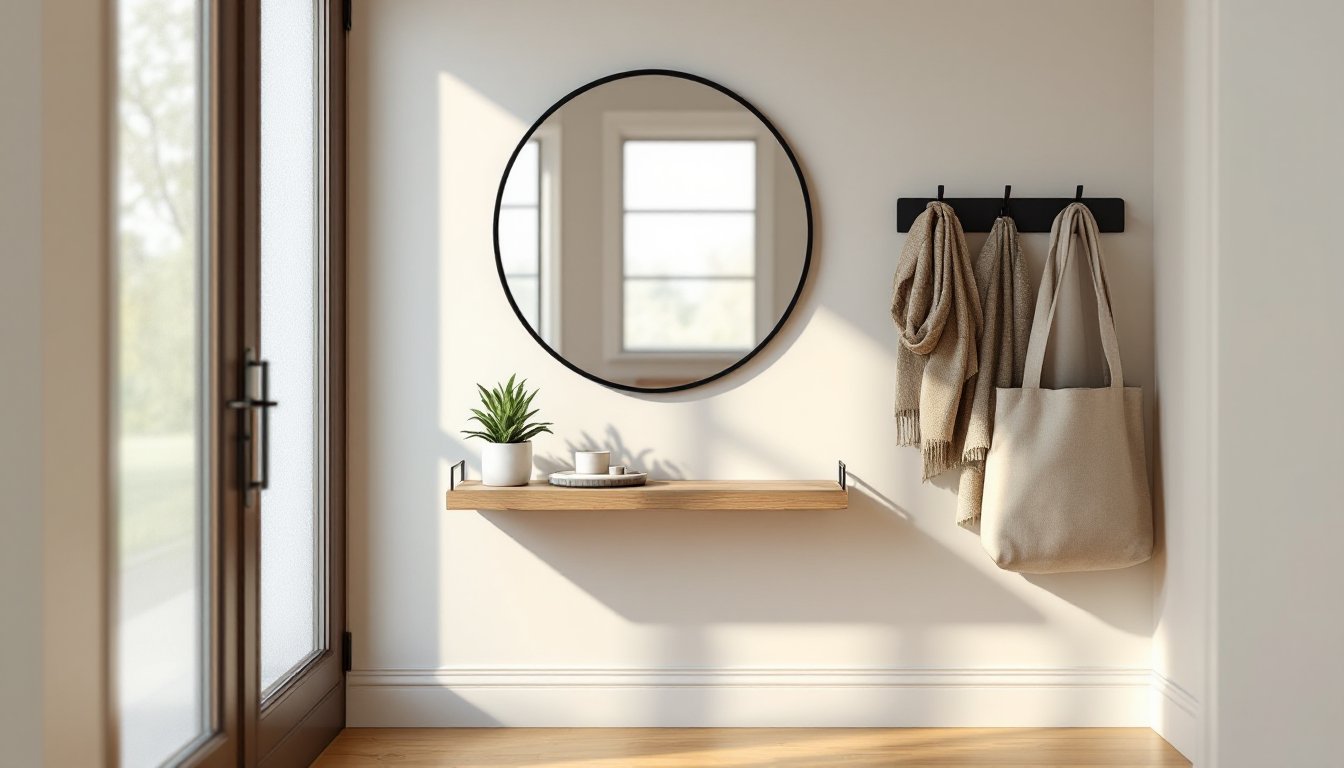
Combining a mirror with functional storage maximizes every inch in a small entryway. Mount a narrow floating shelf 6 to 8 inches deep directly below the mirror to hold keys, sunglasses, or a small catch-all tray. Use ¾-inch plywood or solid wood and support it with concealed shelf brackets rated for at least 50 pounds, even light items add up quickly.
Wall-mounted coat hooks or a peg rail installed above or alongside the mirror keep outerwear off the floor without blocking the reflective surface. Space hooks 4 to 6 inches apart for adult coats: closer spacing works for kids’ items. Look for hooks with a 2- to 3-inch projection to prevent coats from brushing the mirror.
A leaning mirror propped behind a low bench or storage cubby creates a layered look that’s easy to reconfigure. Make sure the mirror’s bottom edge sits behind the furniture piece by at least 2 inches to prevent tipping. Secure the top of leaning mirrors with earthquake putty or small L-brackets if the entryway sees heavy traffic.
For ultra-compact entryways, consider a mirrored coat rack or hall tree that integrates reflection and storage in one unit. These typically feature a mirror panel mounted to a vertical board with hooks and sometimes a small shelf or bench below. You can DIY a simple version by attaching a 12- to 18-inch-wide mirror to a 1×6 or 1×8 board using construction adhesive, then adding screw-in hooks below the mirror.
Pairing mirrors with lighting amplifies the effect. Battery-operated LED puck lights or a plug-in sconce mounted above or beside the mirror brightens the space without requiring an electrician. Many design guides, such as those found on home décor platforms, recommend warm white bulbs (2700K to 3000K) for entryways to create a welcoming glow.
When planning combined mirror-and-storage installations, measure the wall carefully and mock up the layout with painter’s tape before drilling. This prevents misalignment and ensures the mirror remains the focal point rather than competing with too many elements. A balanced composition typically centers the mirror at eye level with storage flanking it or positioned below, keeping sightlines clear and the reflection unobstructed.
If you’re working with a particularly challenging layout, exploring modern design ideas can offer inspiration for unconventional arrangements that blend form and function. The key is maintaining proportion, small entryways benefit from a single strong mirror paired with minimal, purposeful storage rather than multiple competing pieces.