
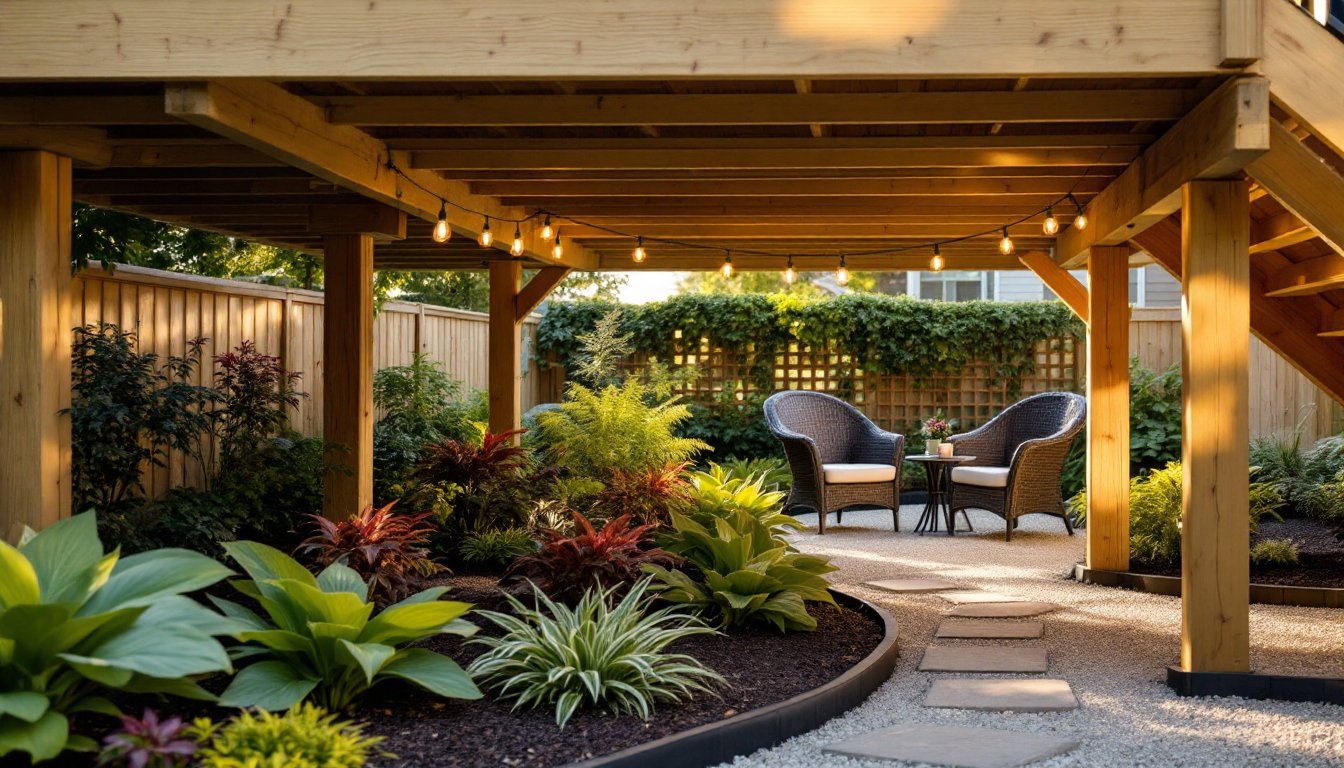
That dim, neglected patch beneath your elevated deck isn’t just collecting cobwebs and forgotten toys, it’s prime real estate waiting for a purpose. Most homeowners ignore the zone under their deck, leaving it as a muddy graveyard for dead leaves and runoff puddles. But with the right approach, this shaded space can become a functional extension of your yard: a shade garden, stone patio, storage hub, or even a cozy outdoor lounge. The key is working with the constraints, limited light, restricted headroom, and drainage quirks, instead of fighting them. Let’s walk through practical, DIY-friendly ways to reclaim that square footage.
Table of Contents
ToggleKey Takeaways
- Under deck landscaping transforms neglected space into functional areas while preventing drainage problems, wood rot, and pest issues that threaten your deck’s structural integrity.
- Shade gardens thrive under decks with 4+ feet of headroom using hardy plants like hostas, ferns, and heuchera that tolerate low light and require proper soil amendment with compost and mulch.
- Install a gravel or stone patio with proper grading, landscape fabric, and a compacted base layer to create a low-maintenance surface that handles water runoff and supports furniture.
- For tight clearances under 3 feet, build or install weatherproof storage solutions like pressure-treated sheds or deck boxes to declutter your garage while protecting equipment from the elements.
- Create a covered outdoor living area in spaces with 6+ feet of headroom by combining finished flooring, all-weather furniture, strategic lighting, and a perimeter French drain to manage water and ensure year-round usability.
- Proper drainage infrastructure—including sloped grading, perimeter French drains, and deck gutters—is essential to prevent standing water and protect deck footings from erosion and deterioration.
Why the Space Under Your Deck Deserves Attention
An elevated deck typically leaves 3 to 8 feet of vertical clearance underneath, depending on your lot’s grade. That’s enough room for seating, planters, or gear storage, yet most homeowners let it become a weedy no-man’s land.
Neglecting this area creates problems beyond aesthetics. Bare soil under a deck erodes during rain, splashes mud onto joists and posts, and encourages mosquito-breeding puddles. Overgrown weeds can trap moisture against wood framing, accelerating rot and attracting carpenter ants.
Treating the under-deck zone as part of your landscaping plan solves drainage issues, adds usable square footage, and protects your deck’s structural members. Whether you have a ground-level deck (18–24 inches of clearance) or a second-story walk-out (6+ feet), there’s a landscape solution that fits. For smaller clearances, focus on hardscape and ground covers: taller spaces can accommodate furniture and vertical plantings.
Creating a Shade Garden Oasis Under Your Deck
Shade gardening under a deck works best when you have at least 4 feet of headroom and dappled light filtering through gaps in the decking boards. Start by improving the soil: under-deck areas often have compacted clay or builder’s fill.
Amend the top 6–8 inches with compost and peat moss (or coconut coir) to boost drainage and organic matter. If your deck blocks rain entirely, plan for manual watering or install a soaker hose on a timer. Shade plants still need consistent moisture, they just don’t tolerate wet feet.
Edge the planting bed with landscape fabric and a 2–3 inch layer of shredded hardwood mulch to suppress weeds and retain moisture. Avoid using plastic sheeting: it traps water and suffocates roots.
Similar principles apply when landscaping under pine trees, where acidic soil and dense shade challenge plant selection.
Best Shade-Loving Plants for Under Deck Areas
Hostas are the workhorse of deep shade. Varieties like ‘Sum and Substance’ (chartreuse, slug-resistant) and ‘Halcyon’ (blue-green, compact) thrive with minimal sun. Space them 18–24 inches apart for mature spread.
Ferns, especially autumn fern (Dryopteris erythrosora) and Japanese painted fern (Athyrium niponicum), add texture and tolerate dry shade once established. Pair them with astilbe for feathery blooms in early summer (though flowering will be sparse in full shade).
Heuchera (coral bells) and tiarella (foamflower) work well as evergreen ground covers in zones 4–9. Their shallow roots handle competition from tree roots or deck footings.
For evergreen structure, try pachysandra or vinca minor (periwinkle), but keep them contained, they spread aggressively. If your deck allows some morning sun (2–3 hours), bleeding heart (Dicentra spectabilis) and brunnera add color in spring.
Avoid sun-lovers like roses, lavender, or ornamental grasses, they’ll stretch, yellow, and flop in low light.
Installing a Gravel or Stone Patio Beneath Your Deck
A gravel or stone patio makes sense when you want a low-maintenance, all-weather surface that handles drainage naturally. It’s ideal for under-deck areas with 4+ feet of headroom where you’ll place furniture or need a clean walking path.
Start by grading the area to slope away from the house at a minimum 2% grade (1/4 inch per foot). This prevents water from pooling against your foundation. Rent a plate compactor ($50–80/day) if you’re covering more than 100 square feet, hand tamping won’t cut it for long-term stability.
Excavate 4–6 inches deep. Lay landscape fabric (commercial-grade, not the flimsy stuff) directly on the soil to block weeds. Add 3 inches of crushed stone base (3/4-inch minus or #57 stone) and compact in 1.5-inch lifts. This base layer is non-negotiable, it prevents the surface layer from sinking into mud.
For the top layer, choose pea gravel (3/8-inch, smooth, comfortable underfoot) or crushed granite (angular, locks together better, less migration). Spread 1.5–2 inches and rake level. Edge the perimeter with steel landscape edging or pressure-treated 2×4s staked every 3 feet to contain the stone.
If you prefer pavers, set them on the compacted base with polymeric sand in the joints. Flagstone or 12×12-inch concrete pavers create a more finished look and cost $2–4 per square foot (materials only). Make sure pavers are at least 1.5 inches thick to prevent cracking under foot traffic.
Many homeowners extend this hardscape approach when landscaping around patios to create visual flow between deck and ground-level entertaining zones.
Building Functional Storage Solutions in Under Deck Spaces
If your under-deck clearance is 3 feet or less, storage beats seating. This is prime territory for lawn equipment, pool supplies, firewood, or seasonal decor, items that don’t need climate control but create garage clutter.
Build a simple shed frame using pressure-treated 2×4s for the base and wall studs. Anchor the base to concrete deck blocks or 4×4 treated posts sunk 12 inches into gravel-filled holes (not required to meet frost depth since it’s non-structural). Space studs 24 inches on center and sheathe with T1-11 siding or exterior-grade plywood (minimum 1/2-inch thick).
For the door, a pair of hinged plywood panels or a single barn-style door on a track works better than a standard prehung door in this application, clearances are tight and you’ll want wide access for mowers and wheelbarrows.
Ventilation is critical. Cut 2-inch holes near the top and bottom of opposite walls and cover with galvanized soffit vents to prevent mold and keep the space from becoming a critter hotel. Don’t use this space for gasoline, paint, or anything with fumes, it’s still adjacent to your home’s foundation.
If building isn’t your style, weatherproof deck boxes (Keter, Suncast) are another option. Choose models with lockable lids and UV-resistant resin. A 120-gallon box holds two push mowers or a season’s worth of patio cushions.
For smaller items, mount wall-mounted racks or pegboard panels directly to the deck posts. Keep everything off the ground on pressure-treated 2×4 sleepers to avoid moisture contact.
Designing an Outdoor Living Area or Lounge Zone
When headroom exceeds 6 feet, the under-deck space becomes a genuine outdoor room, sheltered from sun and light rain, with natural airflow. Think of it as a covered patio without the cost of a pergola or pavilion.
Start with the floor. If you installed a gravel patio (see previous section), that’s your base. For a more finished look, lay interlocking deck tiles (composite or Ipe hardwood) over the compacted stone. These snap together without fasteners and cost $6–12 per square foot. Alternatively, pour a 4-inch concrete slab with 6×6 10/10 wire mesh for reinforcement and finish with a broom texture for traction. Budget $4–6 per square foot for DIY concrete work.
Furnish with all-weather wicker or powder-coated aluminum pieces. Avoid untreated wood or fabric cushions, even under cover, humidity and splashback from rain will take a toll. Homeowners often incorporate similar material choices in simple front landscaping projects that balance durability with style.
Define the space with an outdoor rug (polypropylene, not natural fiber) and add a propane fire table or portable firepit for cool evenings. Check your local fire code, some jurisdictions restrict open flame under combustible structures. A tabletop firepit fueled by isopropyl gel is a safer alternative.
For privacy, hang outdoor curtains on a galvanized wire cable strung between posts, or install lattice panels (4×8 sheets of pressure-treated or vinyl lattice) and train climbing vines like clematis or trumpet vine (if you get a few hours of sun). If your deck has solid skirting, cut ventilation openings to prevent stuffiness.
Lighting and Drainage Considerations for Under Deck Landscaping
Lighting transforms an under-deck space from a daytime hideout into a usable evening retreat. Run low-voltage landscape lighting (12V) on a transformer rated for outdoor use. String Edison-bulb café lights across the underside of the deck joists for ambient glow, or install recessed LED puck lights between joists (requires drilling through decking, seal holes with silicone).
For task lighting near seating or a bar cart, use battery-powered LED strips with motion sensors, no wiring required. Mount them with adhesive backing or stainless steel clips. Proper landscape lighting techniques help establish mood while maintaining safety in low-clearance areas.
Drainage is the make-or-break factor. Even with a sloped grade, water running off the deck will saturate the area during heavy rain. Install a perimeter French drain, a 4-inch perforated PVC or corrugated pipe buried 8–12 inches deep in a 6-inch-wide trench filled with 3/4-inch drainage rock. Wrap the rock in non-woven landscape fabric to prevent silt clogging.
Slope the pipe at 1/4 inch per foot toward a daylight outlet (where the pipe exits above ground downhill) or tie it into an existing storm drain if code permits. If your deck is elevated on a slope, a French drain is non-negotiable, standing water will undermine footings and create a swampy mess.
For decks with gapped boards (standard 1/8–1/4 inch spacing), consider a deck drainage system like Trex RainEscape or TimberTech DrySpace. These install under the decking during construction and channel water to gutters, keeping the space below bone-dry. Retrofit is possible but requires removing and reinstalling deck boards, budget $8–12 per square foot installed. For existing decks, a simpler fix is adding gutters along the deck perimeter to catch runoff before it sheets into your lounge area.