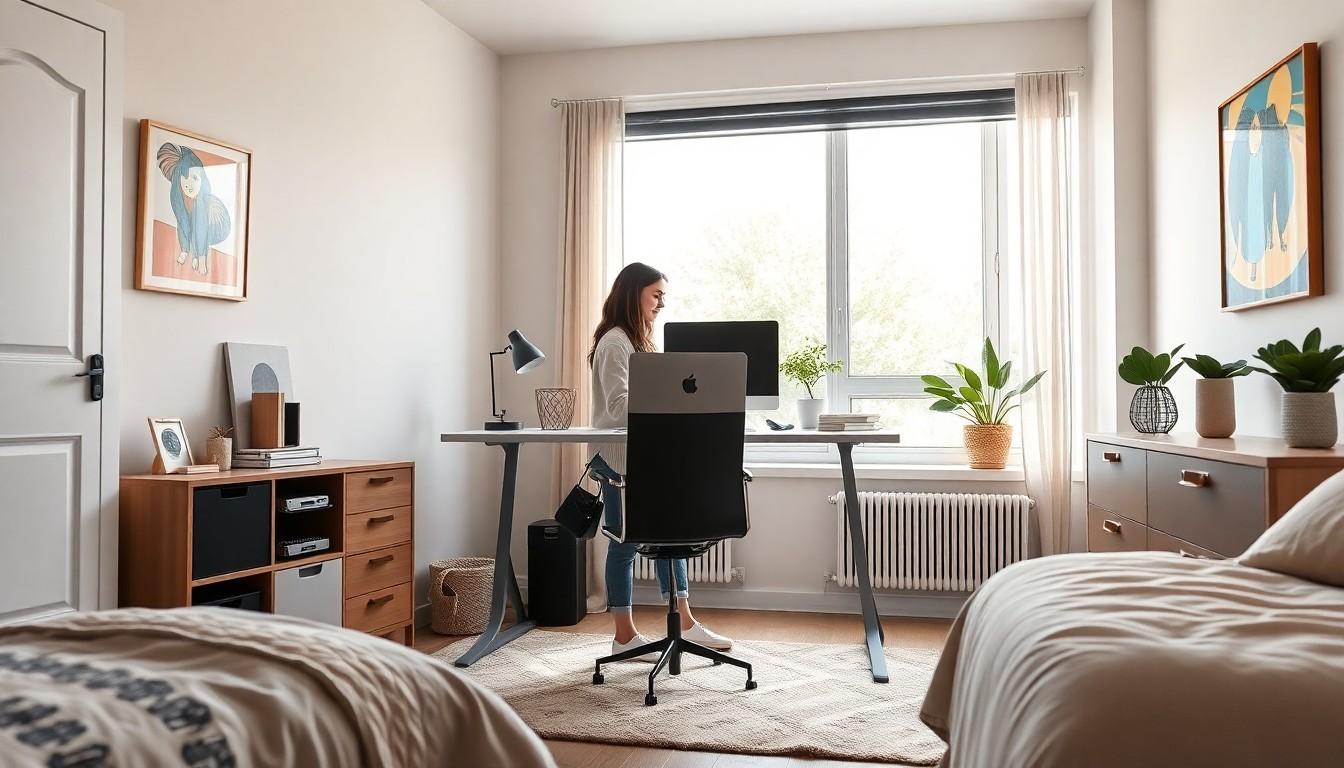
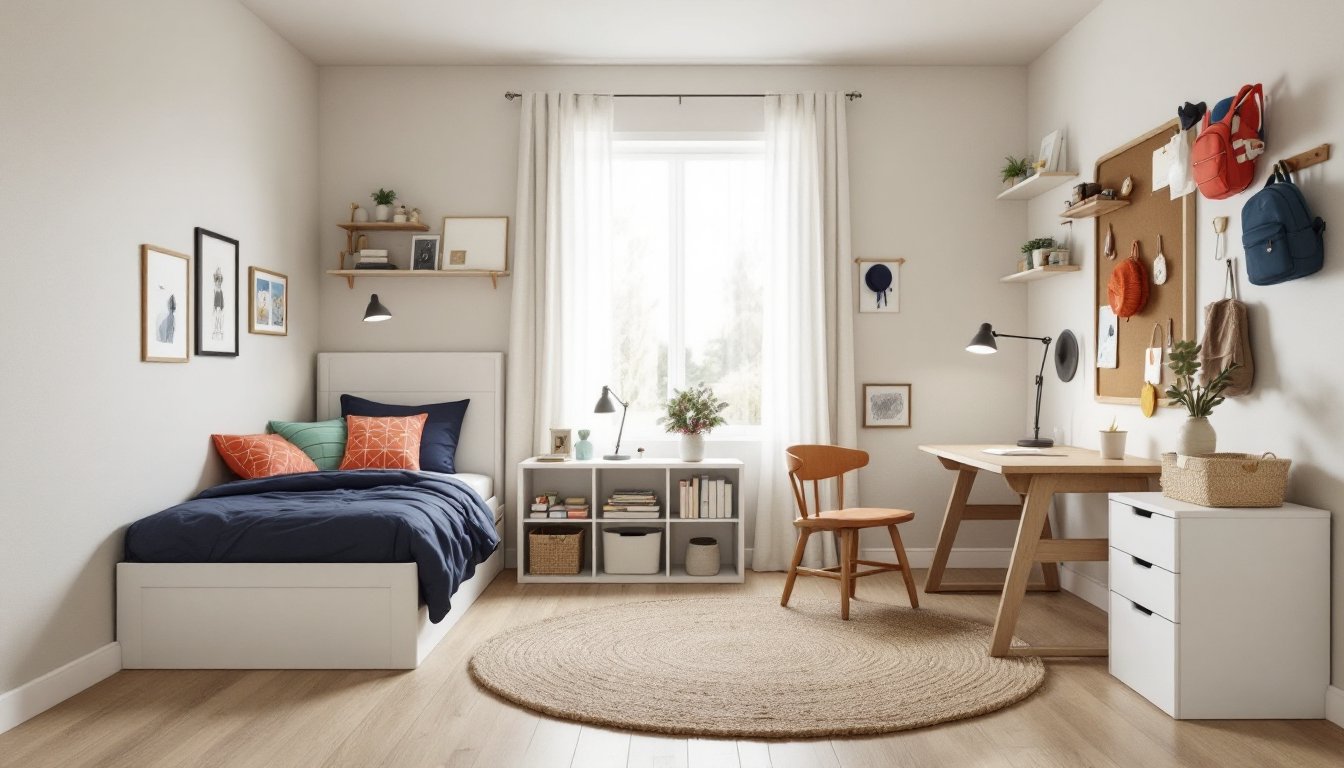
Designing a shared bedroom for a boy and girl isn’t about splitting everything down the middle with pink on one side and blue on the other. It’s about creating a functional, cohesive space where both kids feel at home without the room looking like two separate projects crashed into each other. The challenge comes down to balancing individual personalities with smart planning, storage, and layout decisions that make the most of limited square footage. Done right, a shared room teaches compromise, maximizes your home’s usable space, and can actually be easier to manage than maintaining two separate bedrooms.
Table of Contents
ToggleKey Takeaways
- Shared bedroom ideas for boys and girls succeed when you use neutral base colors and let each child add personal accents through bedding, pillows, and wall art without creating a chaotic ‘his side, her side’ split.
- Smart layout planning—measuring the room, sketching to scale, and choosing the right bed configuration (bunks, lofted, or L-shaped)—is the foundation for maximizing usable floor space and ensuring both kids can access their zones independently.
- Double your storage expectations in a shared room; use under-bed rolling bins, vertical shelving, double closet rods, and dual-purpose furniture like ottomans with hidden storage to keep clutter off the floor.
- Each child needs a clearly defined personal zone with individual lighting, a bulletin board for their own decor, and physical dividers like bookshelves or lightweight curtain panels to foster ownership and reduce conflict.
- Design for longevity by choosing classic furniture and modular storage systems that adapt as kids grow, avoiding character-themed pieces that become embarrassing to older children within a few years.
- Shared bedrooms teach siblings conflict resolution and compromise while freeing up square footage in your home, but verify that your kids’ age gaps, sleep schedules, and temperaments are compatible before committing to a full redesign.
Why Shared Bedrooms Can Work Beautifully for Siblings
Shared bedrooms aren’t just a space-saving compromise, they can genuinely benefit kids when designed thoughtfully. Siblings who share a room often develop stronger bonds, learn conflict resolution early, and gain practical skills like respecting boundaries and negotiating shared resources.
From a practical standpoint, consolidating two kids into one bedroom frees up another room for a home office, playroom, or guest space. This flexibility matters, especially in homes where square footage comes at a premium. The key is giving each child enough personal territory and storage so the room doesn’t feel cramped or chaotic.
Age gaps do matter. A toddler and a teenager will have vastly different sleep schedules and privacy needs, which can make sharing difficult. But school-age siblings close in age, say, within three to four years, generally adapt well to shared spaces. Be honest about whether your kids’ developmental stages and temperaments are compatible for room-sharing before committing to a full redesign.
Smart Layout and Space Planning Strategies
Layout drives everything. Before buying furniture or picking paint, measure the room and sketch a floor plan to scale. Note door swings, window placement, closet access, and electrical outlets. You’ll need at least one outlet per side of the room for bedside lamps or charging stations.
Bunk beds are the go-to space-saver, but they’re not the only option. If ceiling height allows (at least 8 feet is ideal for bunks), they free up floor space for desks or play areas. Alternatively, consider lofted beds with desks or storage underneath, or position twin beds in an L-configuration along adjacent walls to define separate zones while leaving the center open.
If the room is narrow, placing beds parallel along opposite walls creates a natural division. For wider rooms, try positioning beds perpendicular to the same wall, separated by a nightstand or low bookshelf that acts as a subtle divider. Avoid blocking windows or placing beds directly under them, temperature swings and draft issues make for poor sleep.
Traffic flow matters, especially in rooms with only one door. Each child should be able to reach their bed, closet, and storage without crossing the other’s space. If the layout forces one kid to walk through the other’s zone constantly, friction builds fast.
Color Schemes That Appeal to Both Boys and Girls
Forget the dated notion that boys need blue and girls need pink. Modern shared bedrooms work best with neutral base palettes, soft grays, warm whites, sage greens, or muted taupes, that let each child layer in personal accents without clashing.
Start with neutral walls and larger furniture pieces. Then introduce individual color through bedding, throw pillows, rugs, and wall art. One kid might choose navy and orange: the other picks mint and coral. As long as the base is cohesive, those accent colors can coexist without making the room feel chaotic.
Two-tone walls can work if done carefully. Paint three walls in a neutral shade and use an accent color on the fourth, or run a chair rail at 36 inches and paint the lower half one color, upper half another. This adds visual interest without committing to a full-on “his side, her side” aesthetic that feels dated.
Another approach is a monochromatic palette with varied textures. Think all grays but with different materials, linen curtains, a jute rug, wooden furniture, and metal lamp bases. Texture adds depth when color is restrained, and it won’t age out as fast as trendy hues.
Creative Storage Solutions for Shared Spaces
Storage is where most shared bedrooms fail. Two kids mean double the clothes, toys, books, and sports gear, so plan for twice the storage you’d install in a single-occupant room.
Under-bed storage is non-negotiable. Rolling bins or drawers on casters (look for options with ball-bearing slides for durability) make use of dead space and keep clutter off the floor. Measure the clearance under your bed frames, most standard twin beds offer 12 to 14 inches, enough for low-profile bins.
Vertical storage saves floor space. Install floating shelves above desks or beds for books and decor. Use wall-mounted pegboards or slatwall systems for backpacks, hats, and sports equipment. Just make sure shelves are anchored into wall studs with 2.5-inch wood screws or heavy-duty drywall anchors rated for at least 50 pounds per pair.
For closets, double the hanging rods. Install a second rod at 42 inches above the floor for shorter items like shirts and pants, keeping the top rod at 72 inches for longer garments as kids grow. Add a closet organizer system with cubbies or bins to divide space fairly, label each section so there’s no debate over whose stuff goes where.
Dual-purpose furniture earns its keep. Ottomans with hidden storage, beds with built-in drawers, and desks with hutches or cubbies all maximize function without eating up extra square footage. Avoid furniture that only does one thing unless space is plentiful.
Personalizing Individual Zones Within One Room
Each child needs a clearly defined personal zone, a corner or area of the room that’s theirs to control. This sense of ownership reduces conflict and gives kids a retreat within the shared space.
Physical dividers help. A bookshelf positioned perpendicular to the wall creates a partial room divider without blocking light or airflow. Curtain rods mounted to the ceiling with fabric panels (skip heavy drapes: go for lightweight cotton or linen) offer flexible privacy that’s easy to open or close. For older kids, a folding screen or even a tension rod with a curtain between beds works.
Individual lighting is crucial. Each child should have a bedside lamp or clip-on reading light so one can read while the other sleeps. Look for LED models with adjustable brightness, 3-way bulbs (50/100/150 watts equivalent) give flexibility but may be overkill for kids under ten.
Personalize walls without permanent commitment. Use removable wallpaper, peel-and-stick decals, or clip frames that let kids swap out artwork as tastes change. Designate a bulletin board or magnetic board for each child to display their own photos, drawings, or mementos. Positioning these above or beside each bed reinforces the sense of individual territory.
Some families create dedicated home office corners in shared bedrooms by adding compact desks or wall-mounted fold-down tables, giving older kids a defined space for assignments separate from their sleep area.
Age-Appropriate Design Choices That Grow With Them
Kids outgrow themes fast. That astronaut mural or princess canopy might thrill a five-year-old but embarrass a tween. Design for longevity by choosing classic furniture and neutral backgrounds, then layering in changeable decor.
Solid wood beds (look for hardwoods like oak or maple, or quality engineered wood with a plywood core) will outlast particleboard options and can be repainted or refinished as tastes evolve. Avoid character-themed furniture unless you’re prepared to replace it in a few years.
For younger kids, prioritize safety features: rounded corners on furniture, tip-over straps anchoring dressers and bookcases to studs, and cordless window treatments to eliminate strangulation hazards. CPSC guidelines recommend securing any furniture taller than 30 inches that could tip if climbed.
As kids age, their storage needs shift. Toddlers need low bins for toys: school-age kids need desk space and bookshelves: teens need closet systems and tech charging stations. Plan for this by choosing modular storage that can be reconfigured. Cube organizers with removable bins adapt easily, swap toy bins for file boxes or baskets as needs change.
Assignments zones become critical around age six. Each child should have a desk or designated work surface with task lighting (aim for 40 to 60 watts equivalent LED for reading and writing). If space is tight, wall-mounted fold-down desks work, or consider a shared dual-sided desk with a divider down the middle.
Many creative room design ideas emphasize using furniture that transitions through developmental stages, such as convertible cribs that become toddler beds or adjustable-height desks. Websites like HGTV often showcase flexible layouts and modern decor approaches that balance kid-friendly function with timeless aesthetics parents won’t tire of.
Conclusion
A shared bedroom for a boy and girl works when each child has personal space, adequate storage, and input into the design. Start with smart layout planning, choose a neutral color foundation, and build in flexibility so the room adapts as they grow. The result is a cohesive space that respects individuality without sacrificing function, or sanity.