Mounting a TV on the wall sounds great in theory, until you’re staring at studs that won’t cooperate or a rental lease that forbids holes. Putting your TV on a dresser is one of the most practical, flexible solutions for bedroom viewing. It gives you instant height adjustment, doubles your furniture’s function, and keeps cables accessible when you inevitably need to swap devices. Done right, a TV-on-dresser setup looks intentional, not like an afterthought. This guide covers how to choose the right dresser, dial in your viewing angle, hide the wire chaos, and style the whole arrangement so it doesn’t scream “dorm room.”
Table of Contents
ToggleKey Takeaways
- A TV on dresser setup offers a practical, renter-friendly alternative to wall mounting, requiring no permanent holes while providing built-in storage and flexibility to move between rooms.
- Choose a dresser that is at least 44 inches wide with solid wood or quality engineered construction to safely support a 32- to 55-inch TV and avoid overhang hazards.
- Position the TV’s center at 40 to 45 inches from the floor for comfortable eye-level viewing when seated on your bed, maintaining 5 to 9 feet of distance depending on screen size.
- Style your TV on dresser arrangement with symmetrical lamps, textiles, gallery walls, or decor frames to integrate the screen into bedroom decor rather than making it look like an afterthought.
- Bundle cables with clips and sleeves routed down the dresser back, or drill a grommet hole for hidden cable management that keeps the space clean and organized.
- Secure both the dresser to the wall and the TV to the dresser using furniture anchor straps and anti-tip tethers to prevent tipping hazards, especially important for homes with children or pets.
Why Placing Your TV on a Dresser Works for Bedrooms
A dresser is built to hold weight, most modern dressers can support 100 to 200 pounds on top, depending on construction and material. That’s more than enough for a 32- to 55-inch TV, which typically weighs between 15 and 40 pounds without the stand.
You also get storage underneath. Instead of dedicating floor space to a separate media console, the dresser handles clothing, linens, or media gear. Cable boxes, streaming sticks, and remotes tuck into the top drawer, keeping the surface cleaner.
Flexibility is another win. If you move, switch rooms, or redecorate, the dresser goes with you, no patching drywall or reinstalling mounts. Renters especially benefit from this approach, since most leases restrict wall alterations.
Finally, dressers come in every style and finish. Whether your bedroom skews mid-century modern, farmhouse, or minimalist, there’s a dresser that fits the aesthetic. You’re not locked into the generic black or silver look of most TV stands.
Choosing the Right Dresser for Your Bedroom TV
Not every dresser makes a good TV platform. Start by checking the top surface dimensions. Your TV base needs at least 2 inches of clearance on all sides for stability. A 50-inch TV typically has a base width around 40 inches, so aim for a dresser top that’s at least 44 inches wide.
Material and construction matter. Solid wood and quality engineered wood (plywood core with veneer) handle weight better than particleboard. Flip the dresser or check the manufacturer’s specs for a weight capacity rating. If it’s not listed, press down on the center of the top, excessive flex or creaking means it won’t hold a TV safely.
Depth is often overlooked. Standard dressers run 16 to 20 inches deep, while TV bases can be 10 to 14 inches. If the dresser is too shallow, the TV will overhang the back edge, creating a tipping hazard. Match the dresser depth to your TV’s footprint, or go deeper.
Style-wise, low-profile dressers (under 30 inches tall) work well for smaller bedrooms, while taller dressers (36 to 42 inches) suit rooms with higher bed frames or viewers who prefer elevated screens. Avoid dressers with ornate top trim or raised edges that interfere with TV base placement.
Height and Viewing Angle Considerations
The center of your TV screen should sit roughly eye level when you’re seated or reclining in bed. For most adults, that’s about 40 to 45 inches from the floor when propped on pillows.
Measure from your mattress height to your typical viewing eye level, then pick a dresser that puts the TV’s midpoint in that range. A 32-inch dresser plus an 8-inch TV stand height puts the center of a 24-inch-tall screen at about 44 inches, right in the sweet spot.
If your dresser is too tall, you’ll crane your neck. Too low, and you’ll strain looking down. You can fine-tune height with furniture risers (lift the dresser) or a low-profile TV base (lower the screen). Some bedroom TV placement strategies recommend angling the screen slightly downward if the dresser sits above eye level, though this usually requires a tilting mount or wedge.
Distance from bed to TV also affects comfort. For a 42-inch TV, sit about 5 to 7 feet away. For a 55-inch screen, aim for 7 to 9 feet. This prevents eye strain and gives you a comfortable field of view without turning your head.
Styling Your TV and Dresser Setup
A bare dresser top with a lone TV looks unfinished. The goal is to integrate the screen into the room’s decor without cluttering the surface or blocking ventilation.
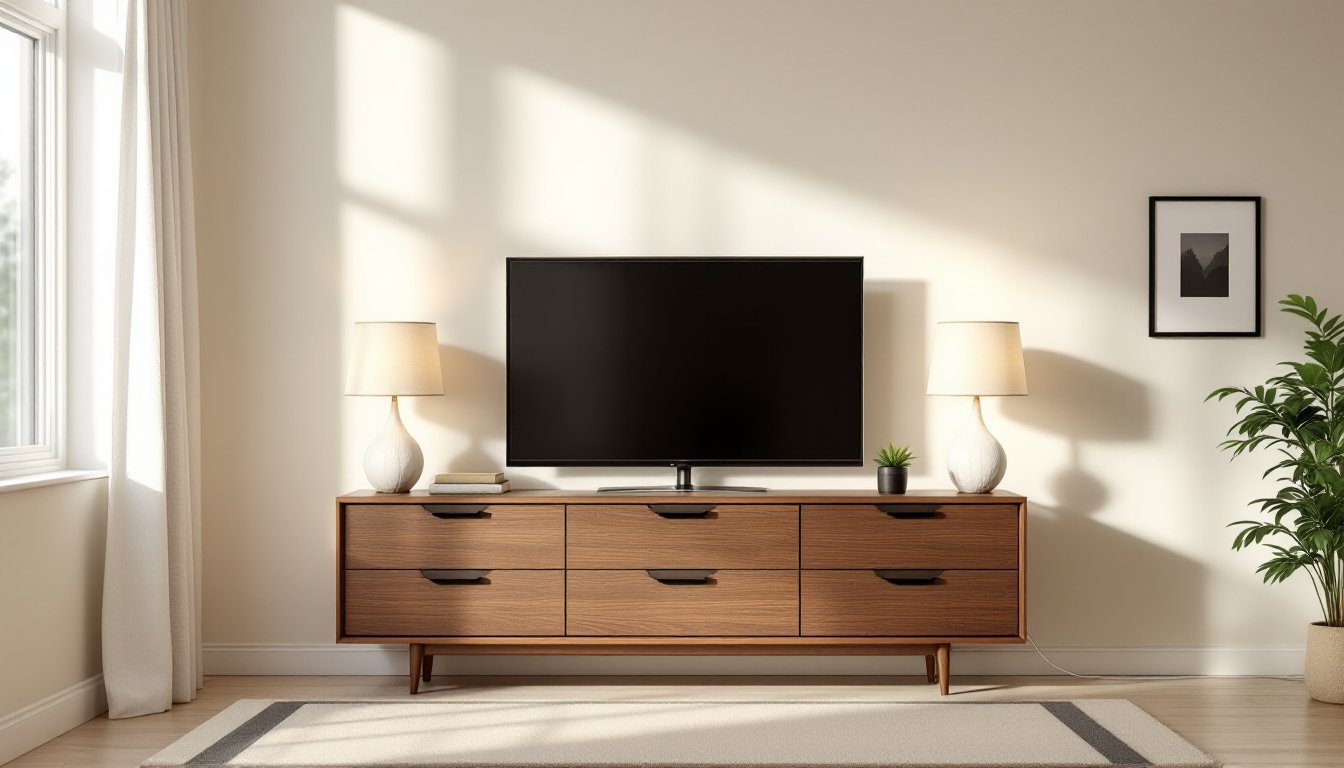
Symmetry works well for traditional or transitional styles. Place matching table lamps on either side of the TV, or use a pair of ceramic vases or framed photos. Keep objects at least 3 inches from the TV to avoid heat buildup, ventilation slots are usually on the back and sides.
For modern or eclectic rooms, try asymmetry. Stack a few books on one side, add a small potted plant or candle on the other. Use varying heights to create visual interest without overwhelming the space.
Textiles add warmth. A linen table runner under the TV softens the look and protects the dresser finish from scratches. Choose a neutral tone that complements the dresser wood or paint.
If the TV feels too dominant, consider a gallery wall behind the dresser. Hang artwork or mirrors around the screen to break up the black rectangle. This works especially well in design-forward bedrooms where the TV is a necessary function, not the focal point.
Decor Ideas to Frame Your TV
Framing the TV visually ties it into the room. One approach: flank the dresser with tall items like floor plants (fiddle leaf figs or snake plants in 10- to 12-inch pots) or slim bookcases. This creates a built-in look without permanent construction.
Another option is a floating shelf above the dresser. Mount it 8 to 12 inches above the TV and style it with small decor, candles, succulents, or decorative boxes. This draws the eye upward and balances the horizontal line of the dresser.
For a cozier vibe, drape string lights or a garland along the dresser’s back edge. Keep them clear of ventilation and use LED bulbs to avoid heat issues.
Consider a TV frame kit if you want the screen itself to look less tech-heavy. These snap-on magnetic frames turn the TV into faux artwork when it’s off. They’re available in wood tones or painted finishes and install in minutes without tools.
Cable Management Solutions for a Clean Look
Exposed cables kill the vibe. Start with a power strip with surge protection mounted to the back of the dresser or tucked inside the top drawer. This keeps plugs accessible but out of sight.
Use cable clips or cable sleeves to bundle HDMI, power, and any other cords together. Run the bundle straight down the back center of the dresser, then route it to the nearest outlet. Adhesive clips stick to wood without damaging the finish.
If the outlet is across the room, a fabric cable cover or cord concealer raceway protects the cable run along the baseboard. These come in paintable plastic or neutral colors and install with adhesive backing or small screws.
For a totally hidden look, drill a 1- to 1.5-inch hole in the dresser top (back corner) to pass cables through. Line the hole with a grommet to prevent sharp edges from damaging insulation. This works best on solid wood dressers, don’t drill particleboard, which can splinter and weaken.
Wireless options help too. Swap cable boxes for streaming sticks, use wireless HDMI transmitters for game consoles, and consider a soundbar with Bluetooth instead of wired speakers. Fewer devices mean fewer cords.
Many TV styling guides emphasize keeping only active cables, remove anything unused. Label each cable with masking tape and a marker so you know what’s what during future tech swaps.
Safety Tips for Mounting or Securing Your TV
Even though the TV sits on a dresser, tipping is a real risk, especially in homes with kids or pets. Use a furniture anchor strap to secure the dresser to the wall. These L-brackets or cables attach the dresser’s back panel to a stud and prevent tipping if someone climbs on it. They’re required under current ASTM F2057 safety standards for tip-over prevention.
For the TV itself, use an anti-tip strap or tether that connects the back of the screen to the dresser or wall. These are often included with new TVs or sold separately for under $15. Anchor the strap to a stud if possible, drywall anchors alone won’t hold during a tip.
Check the TV base mounting screws periodically. Vibration from opening drawers or bumping the dresser can loosen them over time. A quick quarterly check with a screwdriver keeps the screen stable.
Never place the TV near the dresser’s front edge. Keep at least 2 inches of base contact with the surface, centered side to side. If the dresser has a deep top, push the TV back as far as ventilation allows.
If you’re using a swivel or tilt base, make sure it’s rated for your TV’s weight and size. Generic bases sometimes flex under load, creating instability. Brand-name or manufacturer-approved bases are worth the extra cost.
Finally, avoid overloading the dresser top with decor. Keep the total weight, TV, soundbar, lamps, and accessories, under 75% of the dresser’s rated capacity. This leaves a safety margin and prevents sagging or joint failure over time.
If you’re uncomfortable securing the dresser or TV yourself, a handyman can install anchors and straps in under an hour. It’s a small investment for serious peace of mind, especially in earthquake-prone regions or homes with curious toddlers.