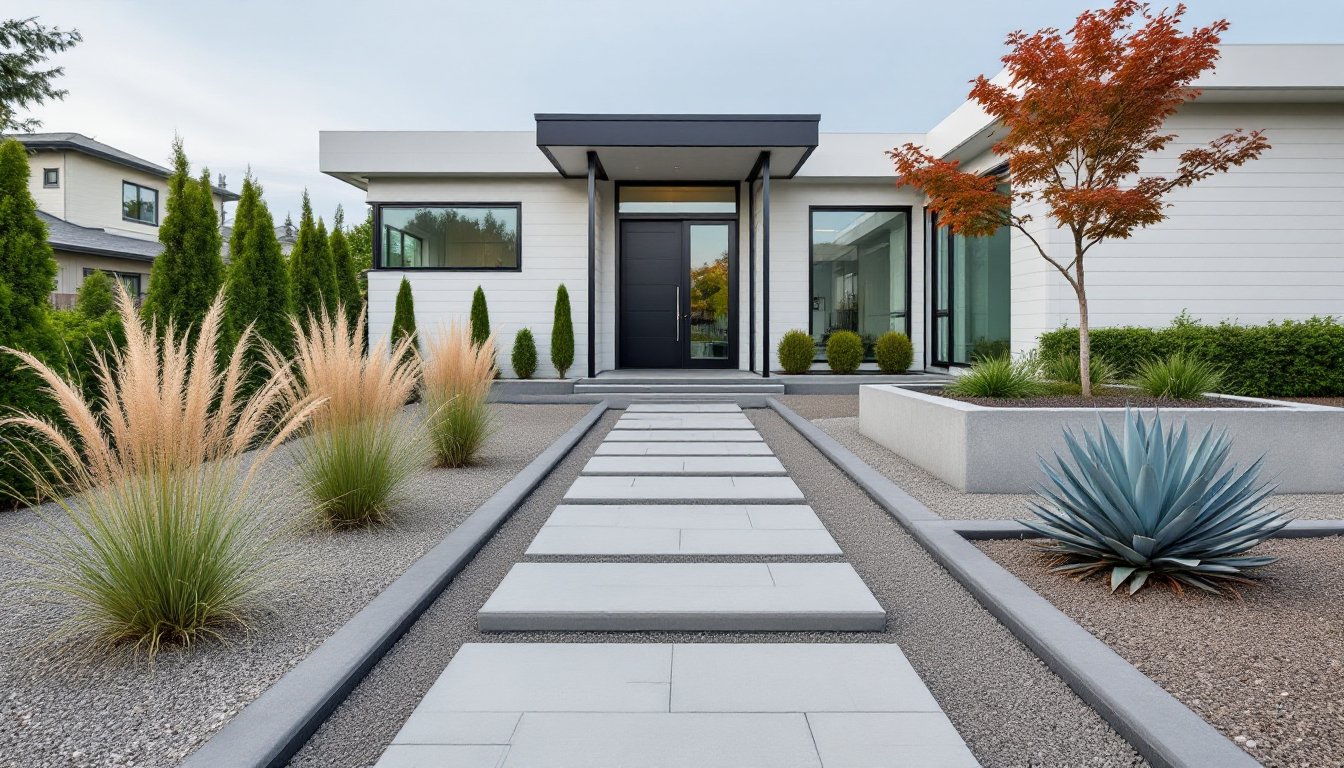
Strip away the clutter, and what you’re left with isn’t emptiness, it’s clarity. Modern minimalist front yard landscaping replaces the chaos of overstuffed flower beds and fussy ornaments with deliberate lines, purposeful plantings, and a sense of calm. It’s not about doing less because you’re lazy: it’s about doing less better. For homeowners tired of weekend yard marathons or looking to make a strong first impression without the maintenance headache, minimalist design delivers both impact and practicality. This approach works whether you’ve got a sprawling suburban lot or a compact urban footprint.
Table of Contents
ToggleKey Takeaways
- Modern minimalist front yard landscaping emphasizes clean geometry, restrained plant palettes, and negative space to reduce maintenance while maximizing visual impact.
- Limit plantings to 3–5 species and repeat them in odd-numbered groupings; combine this with crisp hardscape edges and horizontal lines for a cohesive, uncluttered look.
- Choose low-maintenance plants like ornamental grasses, sculptural succulents, and single-specimen trees with year-round interest to eliminate constant pruning and seasonal fussing.
- Hardscape materials such as large-format concrete pavers, gravel, and steel edging create clean lines and functional pathways that define the minimalist aesthetic.
- Install drip irrigation on a timer and use landscape fabric with gravel mulch to reduce water usage by 30–50% while keeping weeds at bay with minimal effort.
- Edit ruthlessly by removing unnecessary elements and letting every feature earn its place—the result is contemporary curb appeal with significantly less weekend yard work.
What Defines Modern Minimalist Landscaping?
Modern minimalist landscaping strips design down to its essentials: clean geometry, restrained plant palettes, and intentional negative space. Think horizontal planes, monochromatic or near-monochromatic plantings, and hardscape materials that do the heavy lifting.
Unlike cottage gardens or tropical yards bursting with variety, minimalist landscapes rely on repetition and rhythm. You might see the same ornamental grass planted in a linear row, or three identical specimen trees anchoring a gravel bed. Materials are industrial or natural but unadorned, poured concrete, steel edging, river rock, or decomposed granite.
Negative space isn’t wasted space. It’s the breathing room that makes each element stand out. A single sculptural agave in a bed of crushed granite commands more attention than a jumble of mixed perennials. That restraint is what gives minimalist design its visual punch.
Modern minimalist yards also prioritize function. Pathways are direct. Plantings don’t block sightlines or windows. Every feature has a reason to be there, whether it’s screening the trash cans, framing the entry, or reducing water use.
Essential Design Principles for a Minimalist Front Yard
Symmetry and Asymmetry
Minimalist design can lean either way, but it’s never accidental. Symmetrical layouts, matching plantings flanking a front door, for instance, create formality and order. Asymmetrical designs use balance instead of mirroring: a large boulder on one side offset by a cluster of grasses on the other.
Repetition Over Variety
Choose three to five plant species, max. Repeat them in groupings of odd numbers (threes, fives, sevens) for a cohesive look. This principle applies to hardscape, too. Stick with one or two materials throughout, don’t mix flagstone, pavers, and gravel unless there’s a clear transition.
Horizontal Lines
Modern minimalist yards emphasize the horizontal plane. Low-profile plantings, flat-topped walls, and long linear beds draw the eye across the landscape rather than up. This makes spaces feel wider and more grounded. For small house landscaping, horizontal emphasis prevents the yard from feeling cramped.
Defined Edges
Soft, meandering borders don’t belong here. Use steel edging, concrete mow strips, or cut stone to create crisp lines between lawn (if you keep any), planting beds, and hardscape. Edges should be straight or gently curved, never scalloped or fussy.
Scale and Proportion
Oversized elements make a statement. A single large planter beats a cluster of small pots. One substantial tree anchors better than three spindly ones. When planning landscaping around house foundation, choose plants that won’t require constant pruning to stay in proportion.
Best Plants for Modern Minimalist Front Yards
Ornamental Grasses
Miscanthus, fountain grass (Pennisetum), and feather reed grass (Calamagrostis) provide vertical texture without fussiness. Plant them in linear drifts or as specimens. They require one annual cutback in late winter, that’s it.
Sculptural Succulents and Agaves
In warm climates (USDA zones 8–11), agaves, yuccas, and aloes deliver architectural form with zero water needs once established. Their rigid geometry suits modern design perfectly. Pair them with gravel or decomposed granite mulch.
Evergreen Shrubs with Clean Form
Boxwood (Buxus) and Japanese holly (Ilex crenata) work for formal hedges or repeated specimens. For a softer look, try mugo pine (Pinus mugo) or dwarf Alberta spruce (Picea glauca ‘Conica’). Avoid anything that requires frequent shearing to look decent.
Groundcovers Instead of Lawn
Dymondia margaretae, creeping thyme (Thymus serpyllum), or blue star creeper (Isotoma fluviatilis) replace turf with low, walkable mats. They need less water and no mowing. For truly low-maintenance landscaping ideas, consider eliminating lawn entirely.
Single-Specimen Trees
Choose one statement tree with year-round interest: Japanese maple (Acer palmatum), olive (Olea europaea), or crape myrtle (Lagerstroemia). Plant it off-center for asymmetrical balance, or use matching pairs for symmetry. Avoid multi-trunk specimens unless that’s the specific look you want, single-trunk trees read cleaner.
Hardscaping Elements That Elevate Minimalist Design
Concrete Pavers and Slabs
Large-format concrete pavers (24″ × 24″ or bigger) create a sleek, unbroken surface. Lay them in a running bond or stacked pattern with tight joints, no more than 1/4″ gaps. For walkways, float them in gravel or set them on compacted aggregate base with polymeric sand.
Poured concrete with control joints every 10′ offers an even cleaner look, but expect to pay $8–$12 per square foot installed (regional pricing varies). Broom finish provides traction: a light trowel finish looks more refined but can get slick when wet.
Gravel and Decomposed Granite
3/8″ crushed gravel or 1/4″ decomposed granite (DG) works as both mulch and walkable surface. Install landscape fabric underneath to suppress weeds. Edge with steel, aluminum, or concrete to prevent migration into lawn or planting beds. Gravel requires periodic top-dressing (every 2–3 years) as it settles.
Steel and Aluminum Edging
14-gauge steel edging provides the sharpest line between materials. It’ll rust over time, which many designers consider a feature, not a bug. If you want a permanent silver finish, go with aluminum edging (more expensive, softer metal). Both install with stakes every 3’–4′ and bend to curves with a mallet.
Vertical Screening
Horizontal slat fences or panels (6″–8″ slats with 2″–4″ gaps) create rhythm and allow air circulation. Use cedar, ipe, or powder-coated aluminum. For a budget-friendly option, corrugated metal panels (26-gauge galvanized or Cor-Ten steel) provide texture and privacy. Make sure any fencing over 6′ meets local setback and height ordinances, many jurisdictions require permits for front-yard structures.
Planters and Raised Beds
Oversized steel planters or poured concrete boxes anchor entries or corners. Keep them geometric, rectangular or square, not tapered or ornate. For simple front of house layouts, a single large planter with a specimen grass or shrub beats a collection of mismatched pots.
Color Palettes and Material Choices
Monochromatic Plant Palettes
Stick to foliage in one color family: silvers and blues (blue fescue, lamb’s ear, Russian sage), or greens ranging from chartreuse to deep emerald. Flowers are optional. If you include them, limit blooms to one or two accent colors, white and chartreuse, or purple and yellow, and keep them seasonal, not constant.
Neutral Hardscape Tones
Gray concrete, black steel, blonde wood, white stucco. These neutrals let plantings pop without competing. Avoid red brick, multicolored flagstone, or anything with busy patterns. If your house exterior has warm tones (tan, beige, terracotta), echo them sparingly in gravel or DG color choice.
Texture Over Color
Minimalist design leans on contrasts in texture: smooth concrete against spiky grasses, matte steel against glossy foliage, rough stone against fine gravel. This approach, often featured in modern front yard projects, adds depth without introducing color chaos.
Lighting as Material
Low-voltage LED path lights (3000K warm white) or recessed uplights create drama after dark. Install them on a photocell timer. Avoid solar lights, they’re dim and inconsistent. Use shielded fixtures (dark-sky compliant) to prevent glare. Lighting counts as a hardscape element: plan for it early, not as an afterthought.
Low-Maintenance Tips for Busy Homeowners
Mulch Depth and Type
Apply 3″–4″ of mulch over landscape fabric in planting beds. Organic mulches (shredded bark, wood chips) break down and need replenishment annually. Inorganic options, gravel, DG, lava rock, last indefinitely but don’t improve soil. For truly set-it-and-forget-it results, many low-water modern front yards rely on gravel mulch paired with drought-tolerant natives.
Drip Irrigation Over Spray
Install drip lines or soaker hoses on a timer (not a manual valve you’ll forget). Drip irrigation delivers water directly to root zones, cutting usage by 30%–50% versus overhead sprinklers. Use 1/2″ main lines with 1/4″ emitter tubing. Flush the system twice a year to prevent clogging.
Weed Barriers Done Right
Commercial-grade landscape fabric (not plastic sheeting) suppresses weeds while allowing water and air penetration. Overlap seams by 6″ and secure with staples every 2′. Skip the fabric under decomposed granite walkways, it traps sediment and eventually surfaces. For those working on small house front yard projects, weed control makes a huge difference in keeping things tidy.
Strategic Plant Placement
Group plants by water needs (hydrozoning). Put thirsty specimens near the house where you’ll notice if they’re stressed: drought-tolerant plants go farther out. Avoid planting directly against the foundation unless you’re using species that stay under 3′ and won’t trap moisture against siding or stucco.
Seasonal Cutbacks, Not Constant Pruning
Choose plants that look good year-round with one or two annual interventions. Grasses get cut to 4″–6″ in late winter. Evergreen shrubs need shaping once in early spring. If a plant requires monthly trimming to stay in bounds, it’s the wrong plant for minimalist design and should be swapped out. Design inspiration from home design experts often emphasizes this principle.
Conclusion
Modern minimalist front yard landscaping isn’t about emptying the yard, it’s about editing ruthlessly so what remains actually matters. Clean lines, intentional plantings, and durable hardscape replace the clutter and constant fussing that define traditional landscapes. Homeowners get curb appeal that reads as contemporary, not cold, and weekend time back for something other than hedge-trimming. Whether starting from scratch or paring down an existing yard, the principles stay the same: simplify, repeat, and let every element earn its place.